WHY WE’RE HOLDING A ROUNDTABLE ON THE DWP’S PERSONAL INDEPENDENCE PAYMENT REVIEW
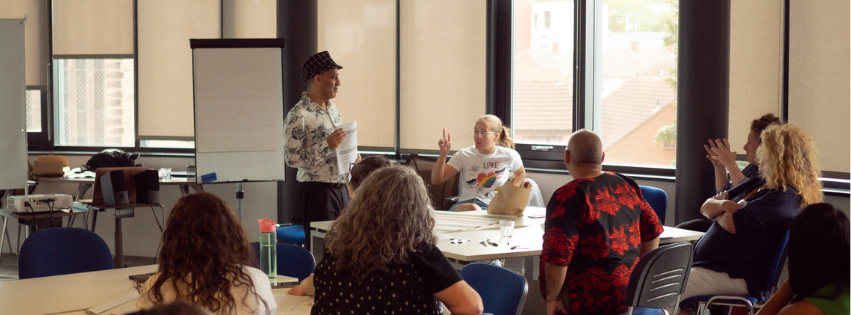
A table of people have a discussion during a conference session. People are animated and gesturing with their hands.

The Department for Work and Pensions is reviewing Personal Independence Payment (PIP) – a benefit that shapes the daily lives of millions of disabled people across the UK. Decisions made in this review will affect how people can pay their bills, access support, move around their communities, and live with dignity. That is why we are bringing people together for a roundtable discussion, and why the voices in the room matter so much. People’s Voice Media’s Head of Partnerships and Practice, Isaac Samuels, tells us why it’s vital that we create this space.

Lived Experience Roundtable on PIP

What is it?

On 5th May 2026 at 6pm, People’s Voice Media are hosting a 90-minute online roundtable on PIP, as a space for people to share their stories, insights, and reflections. This will help shape a response to the current Personal Independence Payment (PIP) Review led by the Department for Work and Pensions.

This session is part of the wider national Call for Evidence, and it’s really important that the voices of people who live with the realities of PIP are centred, heard, and valued.
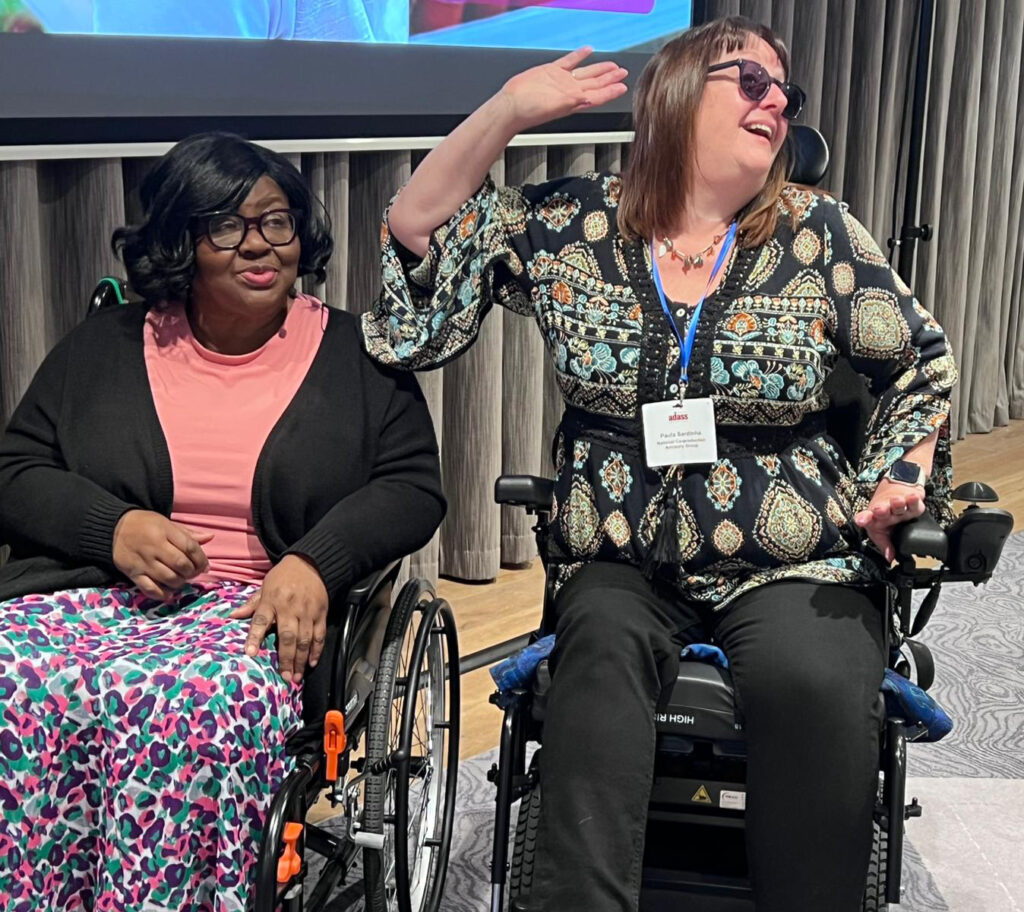
Two women sit in wheelchairs in front of a projection screen. The woman on the left is Black and is smiling, wearing a funky coloured leopard print skirt and peach top. The woman on the right is white and wears a boho style blouse and black trousers. She is smiling and reaching her hand above her shoulder.

About the space

At People’s Voice Media, storytelling is at the heart of how we create change. This space will be grounded in that, offering a supportive environment to share real experiences of PIP, including:

  • What’s working and what isn’t
  • Experiences of applying, assessments, and decisions
  • Where the system feels unfair or inconsistent
  • How experiences differ across communities and intersecting identities
  • What a more human, fair, and dignified system could look like

Why We’re Holding This Space

Reviews of this scale are too often shaped by data points, policy papers, and assumptions about what disabled people need – rather than real experiences of navigating the system. We wanted to create a space where that balance is corrected. We want people who have actually applied for PIP, been assessed for PIP, appealed decisions, waited anxiously for letters, and built their lives around this support to be able to speak honestly and be heard.

The roundtable is a focused conversation around two simple but powerful questions: What is working well? What is not working so well? From small practical improvements to bigger structural concerns, every contribution helps build a clearer, more truthful picture of how PIP is functioning today.

The insights, stories, and recommendations that come out of the discussion will be carefully captured and turned into a collective lived experience response to the government’s PIP review. We will also share key themes back with participants, partner organisations, and decision-makers who can act on them.

What PIP Enables Me to Do

I want to speak honestly for a moment, because this isn’t just a policy conversation for me – it’s my life. As a disabled person living with mental health conditions, PIP is not a luxury or an extra. It is one of the quiet, essential things that makes a decent life possible. Without it, the gap between simply surviving and actually living becomes very wide.

On a practical level, PIP helps me cover the real costs of being disabled – costs that people outside this experience often don’t see. It helps me pay for taxis on days when public transport is too overwhelming, or when leaving the house at all takes everything I’ve got. It helps me keep my home warm when my body and mind need stability. It helps me buy the food that supports my medication and my energy levels. It helps me pay for the little things – noise-cancelling headphones, a weighted blanket, the right kind of lighting – that make the difference between a manageable day and a day lost to sensory overload or a mental health dip.

But the impact goes far beyond receipts and bills. PIP gives me the breathing room to look after my mental health. It means I can attend my therapy appointments without having to choose between them and my electricity bill. It means I can say no to situations that would push me into crisis, because I am not financially forced to say yes. It means I can rest when I need to rest, instead of pushing my body and mind past the point of collapse and ending up worse off.

PIP also enables me to contribute. That part matters to me. Because I have this support, I can do the work I do: advocacy, storytelling, showing up for my community. I can hold down relationships. I can be a good friend, a present family member, a reliable colleague on the days I’m well. People often frame disability benefits as something that holds people back. For me, the truth is the opposite: PIP is what makes participation possible. It is the scaffolding that lets me show up in the world.

Living with a mental health condition alongside a disability means my needs shift. Some weeks I manage well. Other weeks, everything is harder. PIP gives me the stability to weather those shifts without falling off a cliff. It gives me dignity on my hardest days and independence on my best days. It means I don’t have to justify my existence every time my symptoms flare up.

This is the reality I want the review to understand. PIP isn’t just a payment – it is access. It is safety. It is the difference between being pushed to the edges of society and being able to take my place within it. When PIP works, it works quietly in the background, enabling people like me to build a better life. When it doesn’t, the consequences are serious – not just financially, but physically, emotionally, and psychologically.

That is why my voice, and the voices of others like me, need to be in this review.

Why Lived Experience Voices Are So Important

Lived experience is expertise. No one understands the impact of a policy better than the people who live with its consequences every day. When disabled people are at the centre of conversations about disability benefits, policy becomes sharper, fairer, and more effective. Decisions made without that expertise tend to miss the mark, creating systems that are harder to navigate, more stressful to engage with, and less responsive to real need.

Centering lived experience is also a matter of principle. “Nothing about us without us” should be the minimum standard. If the government is serious about improving PIP, then the people who rely on it must be genuinely heard, not just consulted as an afterthought.

What to Expect

The space will be rooted in lived experience storytelling, and offer different ways to contribute. Your insights will directly inform a collective lived experience response to the review.

Date: Tuesday 5 May

Time: 6:00pm – 7:30pm

Location: Online (joining link will be sent once you confirm your place)

How to join: Please email isaac@peoplesvoicemedia.co.uk with any questions, or to confirm you’d like to attend, and we’ll send over the joining link and any final details.

If you have any access needs or would prefer to contribute in a different way, please just let us know. We’ll make sure the space works for you.

We are grateful to everyone who is showing up to share their story. Your voice will shape what we take to government – and that is exactly how it should be.

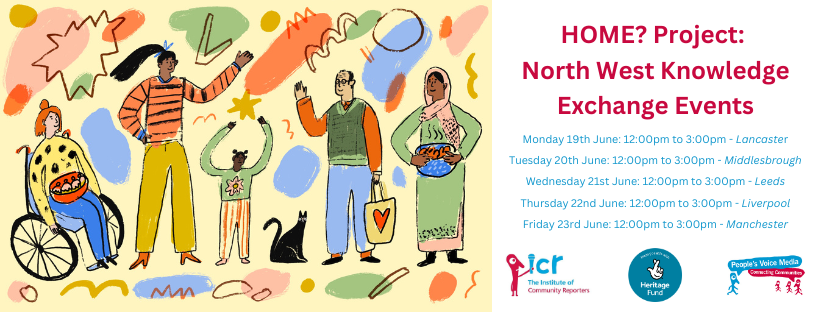
Refugee Week: HOME? Project Knowledge Exchange Events

During Refugee Week in June (19 – 23) there will be significant events across the North of England where the personal stories of migrants and refugees living in the UK will be heard.

The stories have been collected as part of a Heritage Lottery project running in the North of England. The project is managed by Peoples Voice Media and aims to preserve and archive current stories of migration to the UK over the past 10 years.  From these stories there will be the creation of; an educational toolkit, a database of local new articles and an animation, to share with communities so people can gain a better understanding of the current position of migrants and refugees. These resources will give communities the tools to help to build communities of sanctuary.

Peoples Voice Media have been working with Refugee Women Connect in Liverpool, LASSN in Leeds, Global Link in Lancaster, Dragons Voice in Manchester, MAP in Middlesbrough and using peer-to-peer Community Reporting have gathered lived experience stories as well as undertaking archive research and collected local newspaper stories from the past 10 years. 

There will be 5 in-person events in each area Lancaster, Middlesbrough, Leeds, Liverpool, and Manchester to look at the stories gathered during Community Reporting workshops, as well as reviewing key themes from the archive research activities.

The aim of these events is to bring people together from each area; members of the wider local community, cultural and heritage organisations, to explore the findings of the workshops and research. The events seek to open-up a dialogue between different local people about the heritage of migration in their area, how that relates to their current thinking and perceptions and what can be done to better understand, learn from and preserve this type of heritage in the future.

The theme of refugee Week this year is compassion, and this certainly resonates with some of the stories we have heard from participants on the project who have found the British people very welcoming.

“I’m very happy because we met here very nice people, very kind people.’ Karina, Lancaster.

If you’d like to find out more, please reserve your free space by completing the Eventbrite booking forms below:

Monday 19th June: 12:00pm to 3:00pm – Lancaster

https://www.eventbrite.co.uk/e/home-knowledge-exchange-in-lancaster-tickets-616618401237

Tuesday 20th June: 12:00pm to 3:00pm – Middlesbrough

https://www.eventbrite.co.uk/e/home-knowledge-exchange-in-middlesbrough-tickets-616091846297

Wednesdav 21st June: 12:00pm to 3:00pm – Leeds

https://www.eventbrite.co.uk/e/home-knowledge-exchange-in-leeds-tickets-615641499297

Thursday 22nd June: 12:00pm to 3:00pm – Liverpool

https://www.eventbrite.co.uk/e/home-knowledge-exchange-in-liverpool-tickets-616102909387

Friday 23rd June: 12:00pm to 3:00pm – Manchester

https://www.eventbrite.co.uk/e/home-knowledge-exchange-in-manchester-tickets-607556506867

Or get in touch with Kath Peters at People Voice Media at kath@peoplesvoicemedia.co.uk

NEW HERITAGE PROJECT: HOME?

The logo for HOME? - A purple background with yellow lettering in the style of neon lights with an illustration of a house in the place of the 'o'.

We are working on a new and exciting 2 year project called Home? – a project made possible by the Heritage Fund, that focuses on the recent lived experiences of migrants in Northern England. Through Community Reporter stories and Archive Research, we will be exploring what it is and has been like to migrate to Northern England over the past 10 years.

On this project, we will be gathering 100 stories to document authentic lived experiences, looking at how people have settled in (or not) to their new homes, how migrant communities have contributed to the places they now live and much more. Through the stories and archive research we want to give a platform to the diversity of voices that make-up communities across Northern England and explore our very recent heritage – making sure it is preserved for future generations. We will also be embedding a social justice and anti-racist agenda into this work.

These stories will then be showcased in the public arena at a variety of venues such as Museums, Libraries, Schools, Colleges, Universities and we will be creating an animation to bring the key messages from the stories together, as well as a toolkit that will offer guidance in exploring migration in community and informal learning settings. 

To achieve all of this we are not working alone and have partnered up with some great folk to help us bring this vision to life. Specifically, in Northern England we are working with: 

  • Refugee Women Connect, Liverpool 
  • Global Link Development Education Centre, Lancaster
  • Leeds Asylum Seekers’ Support Network, Leeds 
  • Methodist Asylum Project (“MAP”,) Middlesbrough
  • Dragons Voice, Greater Manchester

These local partners will help connect the project and us into communities and engage different people in the heritage activities.

And on a national level we are working with NACCOM – a national network of over 140 frontline organisations and charities across the UK, working together to end destitution amongst people seeking asylum, refugees and other migrants who aren’t able to access to public funds because of their immigration status. NACCOM will be helping us to create the toolkit and tie in the issues and debates from the stories and research into national level conversations.

Stay tuned for more updates!

CONTINUE Project: Community Reporter Training with Gorse Hill Studios

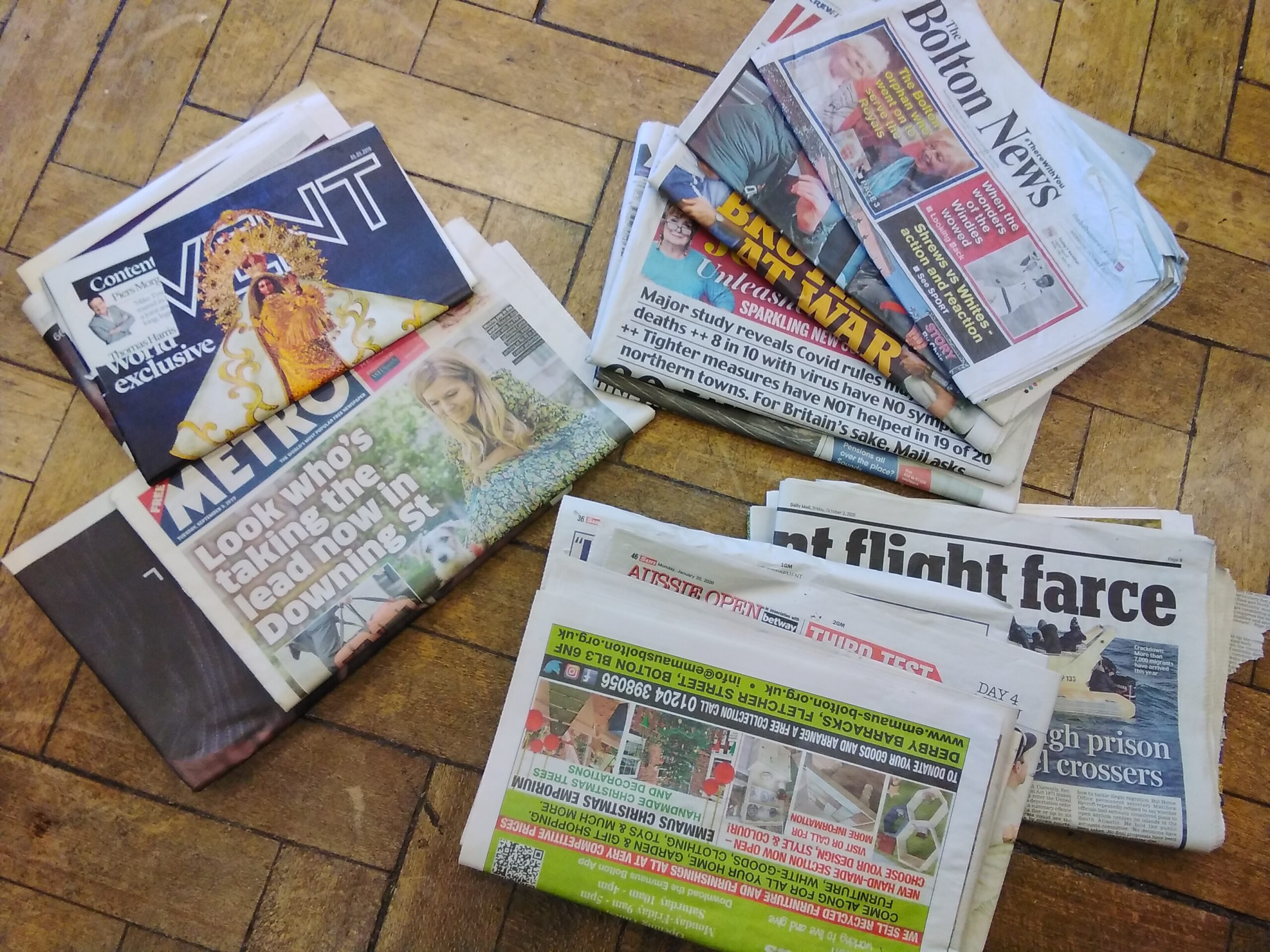
A colour photograph of a pile of newspapers scattered across the floor.

Since September PVM have been working with Gorse Hill Studios – A Youth Arts Charity based in Stretford, Greater Manchester – on a new project focused on gathering young people’s experiences of the COVID-19 pandemic.

COVID-19 was a challenging time for many young people, leading to an increase in financial, material and health related vulnerabilities. Existing connections to the social care system, institutions, job opportunities and vital support networks were strained, contributing to a decrease in social integration. This decline in connectivity was particularly difficult for communities who need support with developing digital communication skills. The CONTINUE project aims to support young people who may be experiencing social exclusion, through helping them to tackle the challenges of living in a world impacted by COVID-19. Activities are centered around keeping people connected and integrated into European communities. There are a total of 8 NGOs involved in the project, with expertise in sectors ranging from youth work, education, community-work and policy recommendation as well as an extended network of organisations from across Europe.

The initial stage of the project involved delivering a series of community reporter training session with young people. For PVM in the UK this happened at Gorse Hill Studios in Stretford, Greater Manchester. Young people learnt storytelling techniques and developed digital skills before recording their own lived experience stories reflecting on their experiences of the pandemic. Each young person’s story varied with some exploring the negative impacts such as feelings of isolation and loneliness and others highlighting the opportunity it provided them to focus on developing hobbies and interests. You can listen to the stories recorded by the young people in the UK and across Europe on the Institute of Community Reporters website.

In November, when the story gathering process is complete, partners will carry out a series on knowledge curation and mobilisation sessions. Young people will analyse the contents of the stories, picking out key themes and learnings which will then feed into a series of Conversation of Change events. These will take place in the localities where story gathering has taken place and invite the young people, local leaders and members of the wider community to collaborate and discuss what findings have emerged from the stories.

Stay tuned for project updates and to find out more about future activities!