WHY WE’RE HOLDING A ROUNDTABLE ON THE DWP’S PERSONAL INDEPENDENCE PAYMENT REVIEW

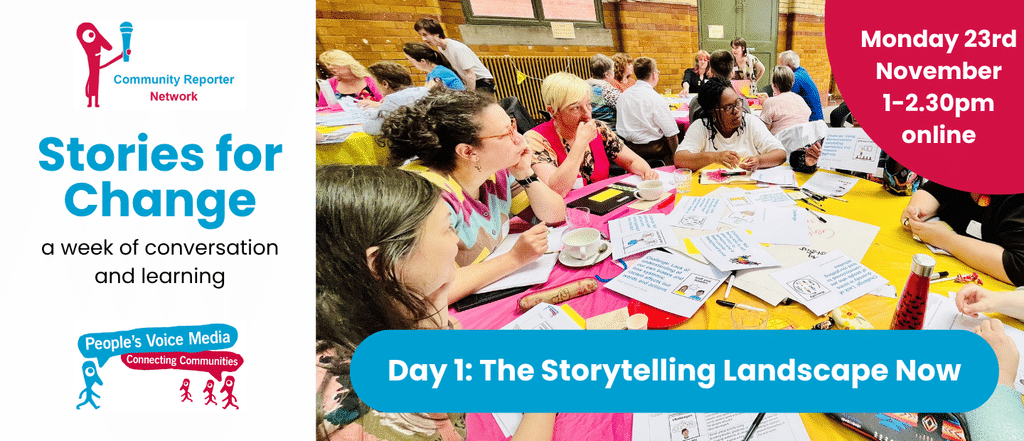
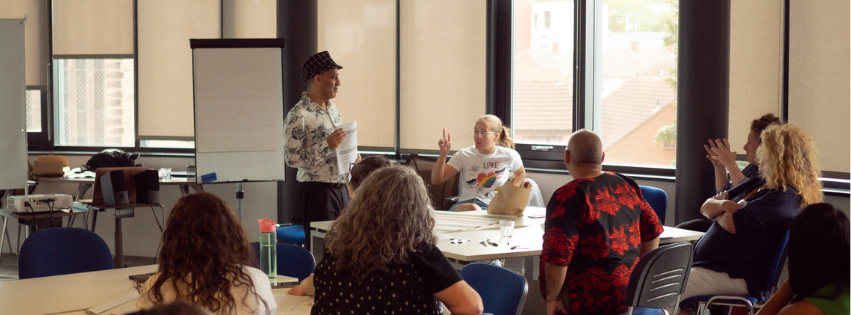
A table of people have a discussion during a conference session. People are animated and gesturing with their hands.

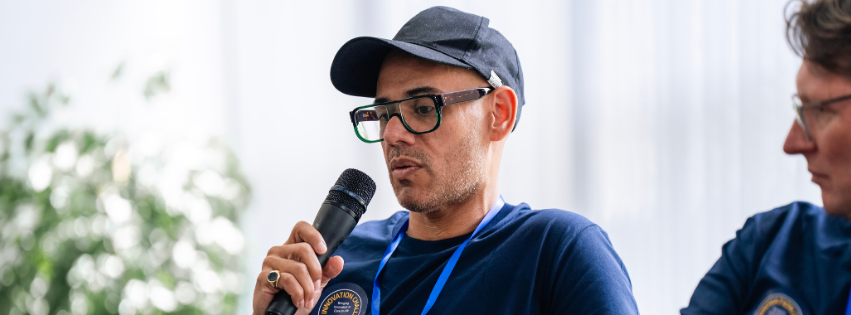
The Department for Work and Pensions is reviewing Personal Independence Payment (PIP) – a benefit that shapes the daily lives of millions of disabled people across the UK. Decisions made in this review will affect how people can pay their bills, access support, move around their communities, and live with dignity. That is why we are bringing people together for a roundtable discussion, and why the voices in the room matter so much. People’s Voice Media’s Head of Partnerships and Practice, Isaac Samuels, tells us why it’s vital that we create this space.

Lived Experience Roundtable on PIP

What is it?

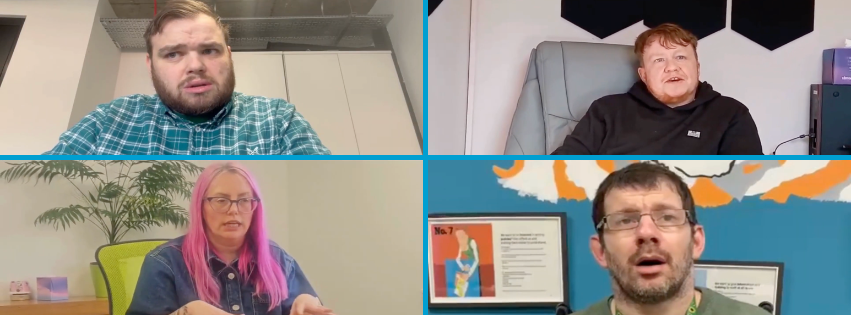
On 5th May 2026 at 6pm, People’s Voice Media are hosting a 90-minute online roundtable on PIP, as a space for people to share their stories, insights, and reflections. This will help shape a response to the current Personal Independence Payment (PIP) Review led by the Department for Work and Pensions.

This session is part of the wider national Call for Evidence, and it’s really important that the voices of people who live with the realities of PIP are centred, heard, and valued.

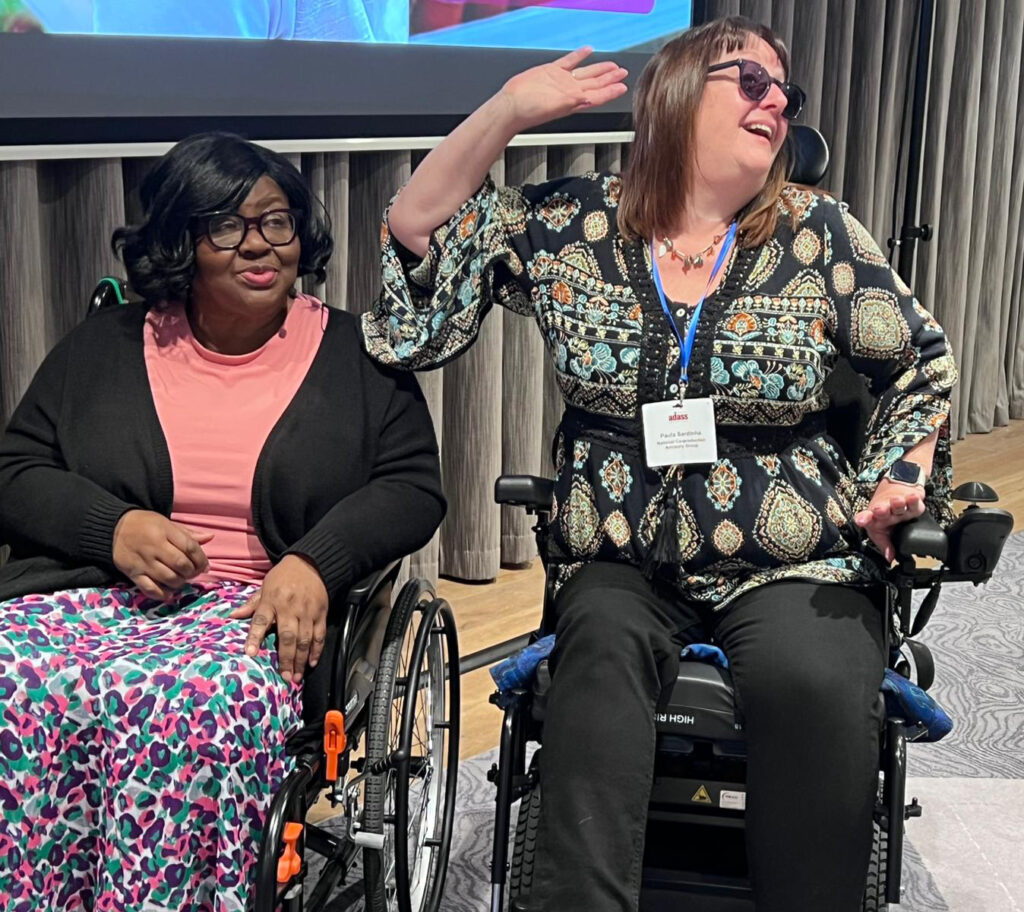
Two women sit in wheelchairs in front of a projection screen. The woman on the left is Black and is smiling, wearing a funky coloured leopard print skirt and peach top. The woman on the right is white and wears a boho style blouse and black trousers. She is smiling and reaching her hand above her shoulder.

About the space

At People’s Voice Media, storytelling is at the heart of how we create change. This space will be grounded in that, offering a supportive environment to share real experiences of PIP, including:

  • What’s working and what isn’t
  • Experiences of applying, assessments, and decisions
  • Where the system feels unfair or inconsistent
  • How experiences differ across communities and intersecting identities
  • What a more human, fair, and dignified system could look like

Why We’re Holding This Space

Reviews of this scale are too often shaped by data points, policy papers, and assumptions about what disabled people need – rather than real experiences of navigating the system. We wanted to create a space where that balance is corrected. We want people who have actually applied for PIP, been assessed for PIP, appealed decisions, waited anxiously for letters, and built their lives around this support to be able to speak honestly and be heard.

The roundtable is a focused conversation around two simple but powerful questions: What is working well? What is not working so well? From small practical improvements to bigger structural concerns, every contribution helps build a clearer, more truthful picture of how PIP is functioning today.

The insights, stories, and recommendations that come out of the discussion will be carefully captured and turned into a collective lived experience response to the government’s PIP review. We will also share key themes back with participants, partner organisations, and decision-makers who can act on them.

What PIP Enables Me to Do

I want to speak honestly for a moment, because this isn’t just a policy conversation for me – it’s my life. As a disabled person living with mental health conditions, PIP is not a luxury or an extra. It is one of the quiet, essential things that makes a decent life possible. Without it, the gap between simply surviving and actually living becomes very wide.

On a practical level, PIP helps me cover the real costs of being disabled – costs that people outside this experience often don’t see. It helps me pay for taxis on days when public transport is too overwhelming, or when leaving the house at all takes everything I’ve got. It helps me keep my home warm when my body and mind need stability. It helps me buy the food that supports my medication and my energy levels. It helps me pay for the little things – noise-cancelling headphones, a weighted blanket, the right kind of lighting – that make the difference between a manageable day and a day lost to sensory overload or a mental health dip.

But the impact goes far beyond receipts and bills. PIP gives me the breathing room to look after my mental health. It means I can attend my therapy appointments without having to choose between them and my electricity bill. It means I can say no to situations that would push me into crisis, because I am not financially forced to say yes. It means I can rest when I need to rest, instead of pushing my body and mind past the point of collapse and ending up worse off.

PIP also enables me to contribute. That part matters to me. Because I have this support, I can do the work I do: advocacy, storytelling, showing up for my community. I can hold down relationships. I can be a good friend, a present family member, a reliable colleague on the days I’m well. People often frame disability benefits as something that holds people back. For me, the truth is the opposite: PIP is what makes participation possible. It is the scaffolding that lets me show up in the world.

Living with a mental health condition alongside a disability means my needs shift. Some weeks I manage well. Other weeks, everything is harder. PIP gives me the stability to weather those shifts without falling off a cliff. It gives me dignity on my hardest days and independence on my best days. It means I don’t have to justify my existence every time my symptoms flare up.

This is the reality I want the review to understand. PIP isn’t just a payment – it is access. It is safety. It is the difference between being pushed to the edges of society and being able to take my place within it. When PIP works, it works quietly in the background, enabling people like me to build a better life. When it doesn’t, the consequences are serious – not just financially, but physically, emotionally, and psychologically.

That is why my voice, and the voices of others like me, need to be in this review.

Why Lived Experience Voices Are So Important

Lived experience is expertise. No one understands the impact of a policy better than the people who live with its consequences every day. When disabled people are at the centre of conversations about disability benefits, policy becomes sharper, fairer, and more effective. Decisions made without that expertise tend to miss the mark, creating systems that are harder to navigate, more stressful to engage with, and less responsive to real need.

Centering lived experience is also a matter of principle. “Nothing about us without us” should be the minimum standard. If the government is serious about improving PIP, then the people who rely on it must be genuinely heard, not just consulted as an afterthought.

What to Expect

The space will be rooted in lived experience storytelling, and offer different ways to contribute. Your insights will directly inform a collective lived experience response to the review.

Date: Tuesday 5 May

Time: 6:00pm – 7:30pm

Location: Online (joining link will be sent once you confirm your place)

How to join: Please email isaac@peoplesvoicemedia.co.uk with any questions, or to confirm you’d like to attend, and we’ll send over the joining link and any final details.

If you have any access needs or would prefer to contribute in a different way, please just let us know. We’ll make sure the space works for you.

We are grateful to everyone who is showing up to share their story. Your voice will shape what we take to government – and that is exactly how it should be.

LGBT+ HISTORY MONTH: QUEER IDENTITIES AND STORYTELLING

A close up of a man at a Pride parade, with a brightly-painted face and wearing a purple glittery top hat, against a background of pink

To celebrate LGTB+ History Month, our Head of Partnerships and Practice Isaac reflects on their experiences of storytelling and Community Reporting as a queer person.

Through storytelling, we work to stand up for social justice, build communities where everyone feels included, and give a voice to people who are often not heard or listened to.

For some considerable time, we’ve been working with stories: listening, learning, and sharing the experiences of real people. As a storyteller, my experiences don’t just come from the work I do. They come from who I am, especially as a queer person living in the world. LGBT+ History Month reminds us that our identities and experiences are part of our stories. They shape the questions we ask, the connections we make, and how we listen to others.

We’ve been learning and improving the way we capture people’s experiences. We work with Community Reporters, trainers, local people, policymakers, and others. Together, we collect stories, listen to real experiences, and bring them into conversations that matter. Each story helps us see the impact of our work and understand the change we need to make.

Recently, I had the chance to hear someone’s story about their transition. They described it as “turning from a caterpillar into a butterfly.” Listening to them really helped me understand, in a human way, what our brothers and sisters go through during this journey. It’s a story of courage, growth, and transformation.

This month is about celebrating LGBT+ History – the ways our similarities and differences make communities stronger. Being queer affects how I see storytelling, yes, but it also helps me make space for other experiences, notice voices that might not be heard, and share stories that build empathy, understanding, and real change.

Storytelling is like a mirror and a bridge. It shows who we are and connects us to each other. It helps us see how our differences can start conversations, how our shared humanity can build trust, and how every voice matters. The stories we tell, the spaces we create, the conversations we have are all acts of love and acts of justice.

For LGBT+ History Month, let’s remember that storytelling is more than a skill – it comes from lived experience. It’s about listening, putting people at the center, and creating spaces where everyone feels seen and heard. It’s about understanding people’s needs and helping make positive change happen.

We’re proud of the work we do and excited to keep learning, growing, and sharing stories that matter. At the heart of everything, it’s love – the love of community, of justice, and of giving everyone a voice.

The Voice of the Dragon – Being a Partner on the HOME? Heritage project

Dragons Voice CIC started working with People’s Voice Media (PVM) on the HOME? Project in May 2022 after discussions with Hayley (CEO of PVM). We feel privileged to be part of this project as we have worked with another organisation on a similar type of project. Initially we intended to gather stories from the BNO new arrivals from Hong Kong but this was not welcomed by that community as many feared for their safety and did not want to participate in a project that will showcase how they are living now since arriving in the UK.

We discussed this with PVM and Kath kindly agreed that we could look at alternative sectors of the Chinese community. In the end we recruited mainly from Mandarin speaker from mainland China who arrived in the UK within the last 10 years.

We found members of the PVM team to be very understanding and willing to adapt to our changing circumstances. As the director authorising the partnership agreement, I felt that PVM as an organisation stands true to its values. I have met Hayley a few times when I attended some training (early 2021) and at a conference way back in 2017. What came across was the philosophy of non-exploitation and letting people take control of their own stories.

How have the participants benefited from the project?

The participants who attended the Community Reporter training gained skills in doing short snapshot and dialogue interviews. They used a tablet to record the videos at the training sessions. The interviews were spoken in Chinese languages so they did not have to struggle with speaking in a second language. Some gathered stories after the training and uploaded them onto the Community Reporter website.

Those who attended the archive research training completed summaries of stories they found in the Manchester Evening newspaper. The focus was on finding stories on positive contributions from migrants. The skills they developed were firstly to locate the articles online and then sifting through the articles to find relevant stories. To conclude, they had to summarise and transfer core information onto the spreadsheet.

The training provided opportunities for strangers to meet up with other peers and transfer some of the learning into practice. Those who struggled with the archive research due to language were supported by those who had better English abilities. The project provided opportunities for participants to talk about and reflect on their migration journeys. Dragons Voice created 2 part-time posts for its volunteers, one to co-ordinate and the other to support in recruitment and organising activities.

Has Dragon’s Voice learned anything from taking part or from the stories?

There are many similarities in the stories, namely people migrate for better opportunities in life. There are always challenges to overcome in the initial transition, be it the weather in UK, availability of food they normally eat, language barriers or employment opportunities. The approach to interviewing in Community Reporting is very different to interviewing to mine for information, which is how we normally work when interviewing guests on our radio shows. In future we should be less focused on getting information we want and instead adopt a facilitative approach for the individuals we interview to tell their stories.

As a director I have learned to devise employment contracts for freelance workers but is not quite sure what to do when they pull out mid-way. I have had to step in and luckily as I had overall management of the project, I was able to pick it up without much trouble.

The Knowledge Exchange event puts the stories we gathered into a wider context and the roadmaps produced offers a sense of direction for future actions. It was good to meet up with other partners at the partners meetings, who worked across broader areas and are much more politically aware. Their comments provided different perspectives and food for thought.

At the conference in Liverpool, I found out about the other great projects that PVM is involved in and it opened my eyes to the broader work of community reporting.

I am painfully aware that Manchester has diverse migrant communities and it was with regret that we did not include these other groups in our project. We did offer the archive training to ALLFM presenter but there was no uptake advertising it on the volunteers steering group meetings and at ALLFM studio. We need to consider in future how to engage with other migrant groups within Manchester.

It is with much appreciation that Dragons Voice CIC was able to be a partner on this project. We hope to be able to work with People’s Voice Media again in the future.

Denise Yuen Megson

Director

Dragons Voice CIC

HOME? Heritage Project Knowledge Exchanges Generate Interest from the Wider Community

The HOME? heritage project funded by the Heritage Lottery Fund has been focusing on the collection, curation, and dissemination of lived experiences of migrants (including refugees, people seeking asylum and other migrants) living in Northern England over the last 10 years. 

In August we pulled together the feedback gathered from the 5 Knowledge Exchanges in the 5 areas during Refugee Week in June and the Pan Northern Knowledge exchange in July in Liverpool. We are now collating the feedback to create roadmaps/action plans for each area including an overarching one for the North of England.

A total of 117 people attended the Knowledge Exchanges and people in each of the areas had the opportunity to hear people’s oral histories about their lived experiences of coming to live in the UK. 

The Knowledge Exchanges gave the wider community the opportunity to learn about this heritage, provoke discussion around the issues and people came up with ideas to input into a local road map/action plan that will help to – 

  • disseminate the learning.
  • create actions that help people to develop compassion and understanding. 

People said the event had inspired them to “get more involved”, “pay more attention”, “speak out more” and given them greater awareness. One expressed an intention to start volunteering. People demonstrated a shift in attitudes. One response described how they would “talk to people more positively about new migrants”, while another stated they would “be more aware of the importance to make people more aware of the similarities we share with asylum seekers, why they come and should not be a competition for resources, housing or jobs”. Another answer described how the event had left them feeling “more excited to be positive and keep working hard to adapt to life as a newcomer in the UK”. These responses show a positive personal impact on some of the attendees of the events.

The main key ideas that came up from the Knowledge Exchanges are:

  • Campaigning for better rights for Migrants, Refugees, and asylum seekers – this includes the right to work, better housing, better financial help, better health support and more legal support.
  • Connecting support services together more effectively.
  • The need for specific trauma informed mental health support.
  • Creating more activities for people to combat social isolation, especially for young men.
  • Better targeted health care support for women.
  • More ESOL support.

The feedback from the Knowledge Exchanges and the roadmaps will inform project resources that are being produced now, in phase 4 of the project, which is focusing on Widening Impact by producing –

  • an educational toolkit – this will be a resource pack for organisations and individuals to use.
  • a website – the stories, newspaper database and toolkit will be available from the website.
  • a local newspaper story archive/database
  • an animation – which will also be part of the toolkit and screened across the 5 areas in early 2024.

During each Knowledge Exchange there was also the opportunity for people to sign up to get involved with the project and many people have signed up. In response to this we are currently planning more Community Reporting training, Archive Research Training and Train the Trainers training that will happen from Oct through to March.

GIVING PEOPLE’S VOICES MEANING FOR THE COVID INQUIRY

The  report to the COVID Inquiry has now been completed. It has been sent to the COVID Inquiry team and you can access the report here. Below you have a summary of some of the key points and links to the conversations that PVM had with people, to give you a preview of what the report includes. 

Links to extracts from 6 of the 22 participants

Keymn explains why having an understanding of the value of lived and living experience is training that healthcare professionals must have.

Miro explains why society has to re-think and understand disability differently.

Amanda tells us why COVID information was not fully accessible for Deaf people and what could have been done differently. 

Andy explains to Isaac the reasons for involving people with lived and living experiences.

Hameed discusses both the positive and negative aspects of the pandemic.

Baroness Brinton talks about health and social care problems that were highlighted during the pandemic.

Links to full conversations with all participants

The PVM process starts with individuals narrating their experiences, facts and feelings. We did this by talking to 22 people as part of the joint work with DRUK, so that the lived experiences of Deaf and Disabled people could be input to the COVID Inquiry.

There was one point in the process, where the information given by individuals seemed overwhelming. This was partly because everything felt important and relevant, but also because the task of determining key themes seemed a difficult or limiting process.  For example, when it felt as though every point people made was important, it then seemed like we might be trivialising the topic if we tried to distil it to a few main aspects.

However, the PVM process means that meaning emerges, although this doesn’t happen by magic.  We listen and highlight what we think is important. We might colour code, group together or count how often topics are talked about. We also consider how frequently a contributor might return to talk about a lived experience, as an indication of how strongly they feel about the issue.

For the COVID Inquiry work, we began with some open questions to allow people to give their lived and living experiences in a broad way and in their own words. As the work progressed, and by the time we had recorded 10 narratives, we were able to include some more focussed questions, e.g. Other people have said _____, did you find this was the same for you or what was your experience of this? There was definitely the need to balance the open questions against more focussed ones, because we did not want to lead the participants down a specific route, but we were aware that being able to give the COVID Inquiry team specific details would be important.

In the report we’ve included direct quotations from many of the people who shared their lived experiences. Where necessary, we’ve also offered explanations, based on the conversations and online sense making workshops we held. This is because we wanted to clarify for the Inquiry why particular aspects were different or difficult for Deaf and Disabled people. The key points from the report are:

·  There was confusing and frightening information from national government and local authorities to Deaf and Disabled people.

·  COVID both highlighted and exacerbated existing systemic problems and Inequalities (including racism, ageism and ableism) within statutory services

·  Even though there is legislation, little understanding exists about Deaf and Disabled people’s needs.The report is comprehensive and has had an emotional impact on some readers. We hope it will give people’s voices meaning so that the COVID Inquiry can make recommendations that will support Deaf and Disabled people, together with their carers. As Keymn Whervin stated in the foreword to the report: “The Inquiry must ensure that people affected by COVID have their voices heard, particularly in respect of how we co-produce health and social care”.

Isaac Samuels