2025 saw the launch of a new 3 year Children in Need funded project, which will give young people the skills to use lived experience storytelling as a tool for social change.
Since launching Future Changemakers, we have partnered with youth organisations in the West Midlands and Greater Manchester to deliver Community Reporter Training and Train the Trainer workshops to young people, staff and volunteers. The groups have developed tools to tell their own stories and that of their peers and shape these into ideas for social action.
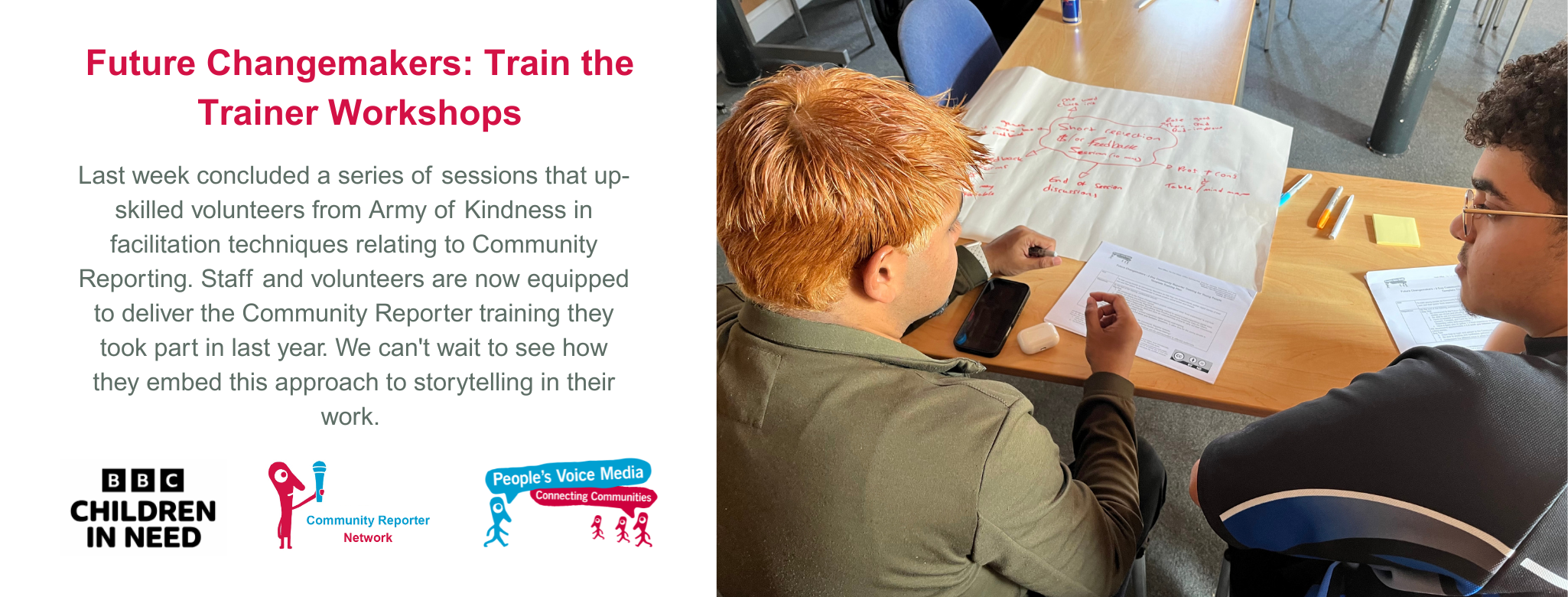
Last week concluded a series of sessions that up-skilled volunteers from Army of Kindness in facilitation techniques relating to Community Reporting. Staff and volunteers are now equipped to deliver the Community Reporter training they took part in last year. We can’t wait to see how they embed this approach to storytelling in their work.
Army of Kindness alongside West Midlands Police Cadets are the first organisations to form the foundation of the growing Future Changemakers Community Reporter Network. As we move into the 2nd year of the project we will be partnering with more youth organisations starting with Bristol and Liverpool and hope to broaden our reach and connect with more people.
If you’d like to know more about this work please reach out to Lauren@peoplesvoicemedia.co.uk and Georgia@peoplesvoicemedia.co.uk to find out more.
Future Changemakers is a three-year project, funded by BBC Children in Need, where People’s Voice Media are working with youth organisations across the country to build a Young Community Reporters Network. Each youth organisation is receiving training in the Community Reporter method, giving young people the skills and knowledge to get their voices and their lived experience stories heard to create change. We will also be working with youth leaders to undertake “train-the-trainer” work, so that they can embed youth voice within their groups for the future. Here, facilitator and project manager Lauren Wallace-Thompson gives us an update on the first youth group to take part in the programme:
I had the pleasure of working with the wonderful Army of Kindness in Rochdale, training some of the young people in Community Reporting methods to support their changemaking work. They are no strangers to social action, running weekly soup kitchens and supporting people in their community on a regular basis. A brilliant example of how people can come together in positive action!
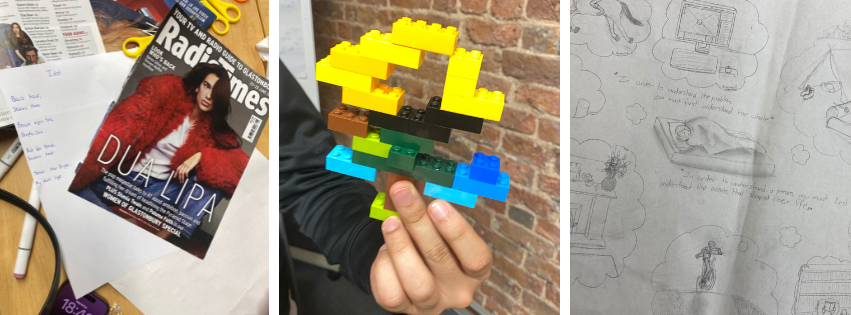
I visited the group for evening creative workshop sessions where we looked at why stories are so important in our lives, and explored telling our own stories and what was important to us through Lego, collage, poetry and models. The young people produced sculptures dealing with bereavement, justice, and belonging; poetry about Dua Lipa and what it is to be misunderstood by your parents; and some incredible drawings by talented young artists telling memories of family trips to Umrah, and their hopes for their future. Some of the young people also shared their lived experiences of racism and prejudice, and this became a key focus for the group’s work and their social actions.
One of the things I enjoy most about my job is how I learn new things all the time from the people taking part in our projects. Every session is like a lesson from ten different teachers, all with their own specialist subjects. But the young people in Army of Kindness especially made an impact on me with their really insightful reflections on the influence of social media in their lives and the ways in which personal connections and understanding can bring people together. They also gave me an education in great snacking – grating cheese into a Pot Noodle was a culinary revelation – and I had, shockingly, never tried Irn Bru before (“Asian beer”, according to the group’s leader).
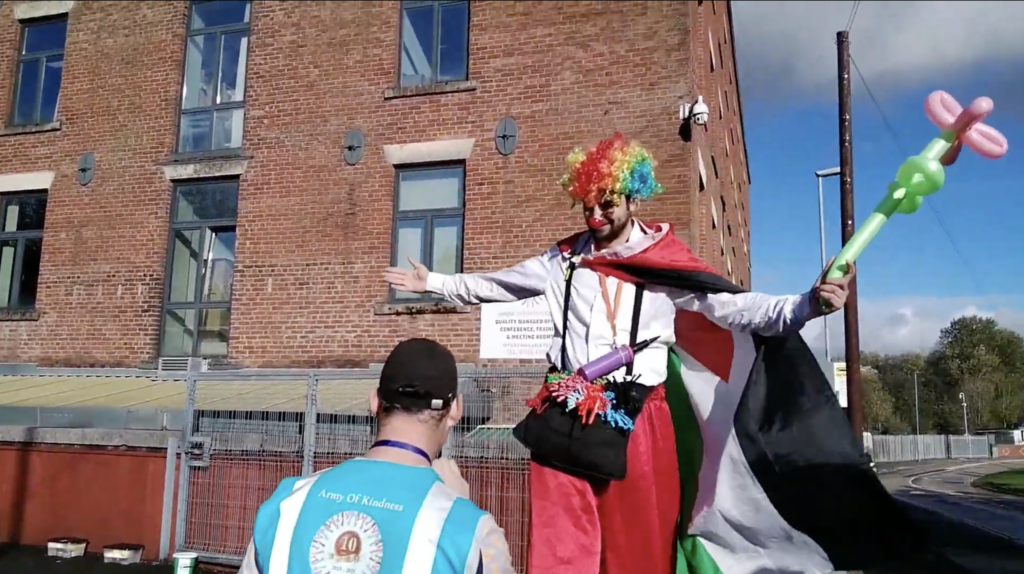
The group put the Community Reporting skills they had learnt into action when they held a community funday in the October half-term holidays, gathering video and audio stories from attendees at the funday to find out what they thought about the event. The Young Community Reporters interviewed a great range of people to get their experiences of the day, including a clown, a local councillor, and a 9-year-old entrepreneur!
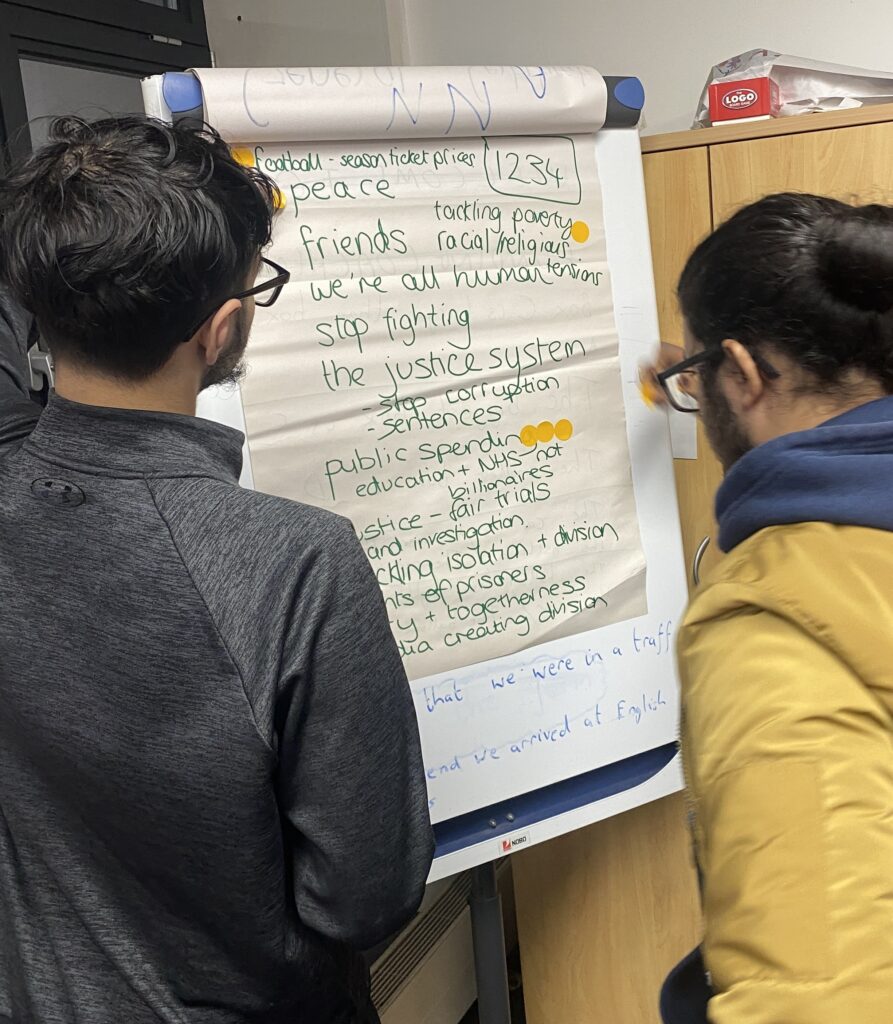
The young people then learnt how to analyse the findings of our Community Reporting in a “sense-making” session. Here are the trends they identified:
The stories provided a sense of how people had enjoyed the event, but also praise for the wider work that Army of Kindness does locally.
People would like to see more events like this in the future.
Attendees especially enjoyed the food and community spirit.
People appreciated the opportunity to give towards a good cause
The diversity of attendees was a positive and the event gave people a chance to learn about each others’ cultures.
Reflecting on the stories as a whole, the group saw how it was a way to get detailed, experiential feedback to evaluate their event, but also noted how Community Reporting could be a tool to gather information to support their group and their work going forwards, such as comments about the positive differences that Army of Kindness have made to the local community, which might support their fundraising, grant applications and profile-raising.
Here are some perspectives from the young people taking part in the Future Changemakers project:
“I learned about dialogue interviews, different types of questions, and how to be more professional in interviews.”
“I really enjoyed getting to know and hear about the perspectives of other people.”
“The session was awesome, I really enjoyed it, especially the practical interviewing part.”
“I learnt that everyone has their own stories.”
“Everyone is human we need to stay in peace.”
“I learned new information about life in Rochdale for religious women.”
People’s Voice Media will return to Rochdale this spring/summer to train youth leaders and older young people in a “train the Trainer” session, so that they can deliver Community Reporter training to more young people and keep the skills of Community Reporting and extend their use within Army of Kindness.
We are still in the first year of the project. Our second group are Police Cadets in the West Midlands – stay tuned for updates on how they got on.
If you are running a youth group or other youth project and would be interested in learning a tool to increase youth voice and participation, and build communication and media skills among the young people you support, there are still some spaces left to join the project in Year 2 and 3. Please email lauren@peoplesvoicemedia.co.uk for more information.
For the past six week, people from across Greater Manchester have been taking part in the Changing Futures Community Reporter Training Programme.
PVM have partnered with Greater Manchester Combined Authority to deliver a series of eight workshops as part of the project. So far we have covered the core aspects of community reporting, and people have started to gather and upload stories to the Community Reporter Website.
The end goal of the project is to gather stories of peoples lived experiences of multiple disadvantage, specifically from people whose voices are often not listened to. GMCA plans to use these voices to improve the range of support services available to communities across Greater Manchester. In the process, people will be upskilled in Community Reporting and by the end of the project will be experienced enough to conduct their own story gathering projects in their own communities.
Over the course of the first 4 sessions, participants developed a basic understanding of community reporting. They learned interview techniques, digital literacy skills and explored their understanding of ‘multiple disadvantage’ in the context of their own lives experiences.
“Being around the team and learning – it’s good to open up“
A group member reflecting on what they’ve enjoyed in the sessions.
For the past two weeks the group have been out gathering stories in their own communities – take a look at the Community Reporter website to view some of them!
“There’s not just me going through what I am going through”
A group member reflecting on what they’ve learnt during the sessions.
For the remaining four sessions, the group will review the stories they have gathered, picking out the key themes and learning points. They will then learn how these findings can be shared more widely and used as tools for creating positive social change – hopefully putting these techniques into practice.
Stay tuned for more updates on the Changing Futures Community Reporting Project!
Since May 2021, People’s Voice Media have been partnering with Ideas Alliance on Not Another Co-Production Project.
The aim of the project is to move co-production from a buzz word into an embedded practice within grassroots organisations across England. We want to facilitate a knowledge exchange which ensures local people become active citizens, are involved in decision making and can shift power in their community, creating equitable partnerships between residents, services and local authorities. We want a future where policy, research and service design are informed by the lived experiences of local people and where collaboration is the norm not the exception.
As part of a 3-year project, Ideas Alliance will work with People’s Voice Media to deliver a co-production development project. This project will benefit local people, professionals and organisations across England, through engaging them in co-production workshops, Community Reporting, annual community learning festivals and a peer support network that connects people and creates a partnership of practice.
The first year of the project has been based in Greater Manchester and has seen a series of workshop delivered on co-production, community reporting and storytelling.
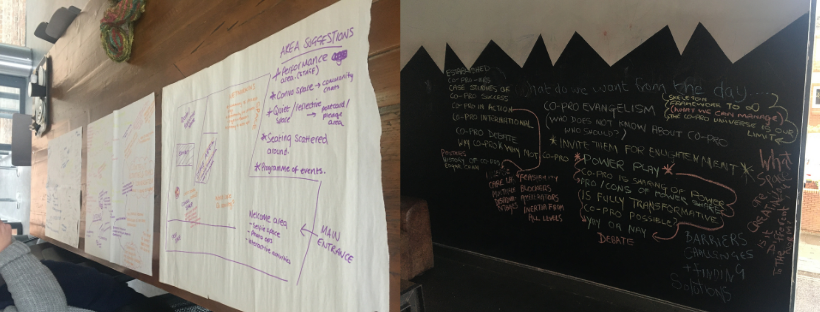
Most recently planning has begun for the first of three community learning festivals, which is set to take place in Manchester this summer. Last week members of Ideas Alliance came together with project contributors from across Greater Manchester at the Science and Industry Museum to discuss what should be included in the festival. The day will be a chance for people to learn more about co-production, challenge their understanding of what it is and most importantly celebrate how it can be used as a tool to create positive change within a range of different settings.
Stay tuned for future updates on the project and keep a look out on socials for invites to the festival!
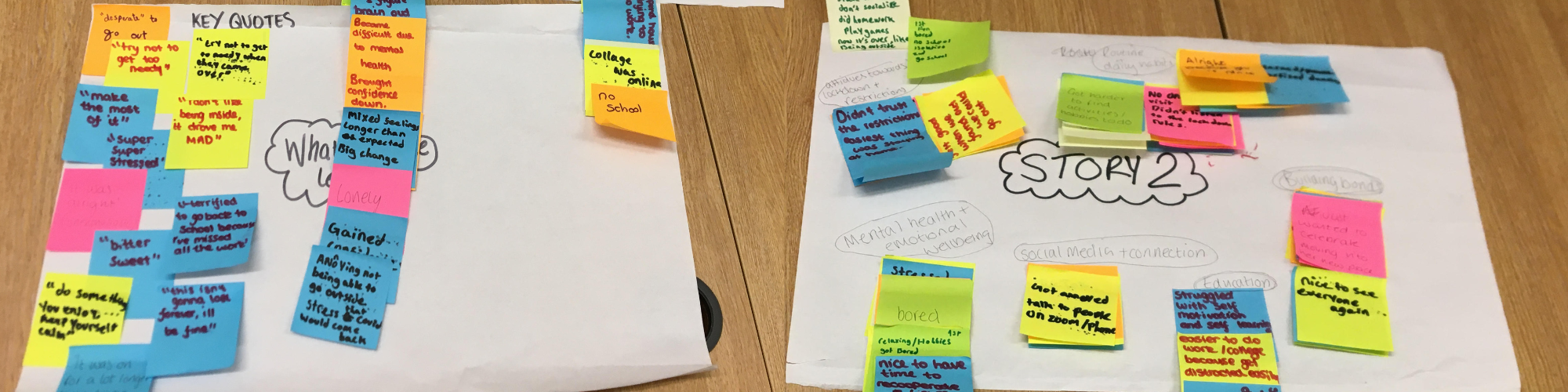
The CONTINUE project supports young people experiencing social exclusion to tackle the specific challenges COVID-19 in terms of staying connected and integrated into European communities. The project is being delivered by 8 NGOs from different European countries who are experienced in youth education and community based activities. The work involves storytelling, social action projects, policy development, knowledge exchanges, an outreach campaign and the creation of an online platform. As part of the CONTINUE project, each partner organisation has delivered a series of story gathering and curation workshops with young people from varying locations across the UK and Europe. The findings of the workshops have fed into the creation of a series of insight reports which provide an overview of young people’s experiences of the COVID-19 Pandemic. In the UK, People’s Voice Media worked with young people at Gorse Hill Studios in Stretford, Greater Manchester and the key findings cover a range of topics including education, social media, mental health and wellbeing.
Education
“I was terrified to go back to school because I’ve missed all the work.”
The transition to and from online and in-person education was challenging for young people to adapt to. Some felt being at home provided a better space for concentration and focus due to fewer distractions, whereas others struggled with finding the self motivation required when studying from home. Lockdown meant that young people had more free time to spend at home, some used this time to complete homework, whereas others focussed on developing new skills and hobbies. Overall there were mixed feelings about how COVID-19 had impacted the young people’s experiences of education, some were less bothered about what they had missed out on, as they didn’t enjoy school with some feeling happy about not being there. Others found being away from school stressful as they were concerned about catching up on work and wanted to know when things would go back to what they were used to. When lockdown restrictions were lifted, most young people felt happy to be back in school, particularly when they reunited with friends, although social distancing took some time to adjust to. Wearing masks and remembering the rules was difficult at times and there was a sense of panic around returning to school with restrictions still in place. Young people also reported how they struggled with behaviour when returning to school, highlighting how they had previously been kicked out of school for bad behaviour. From these findings it is clear that young people would benefit from more support with transitioning in and out of the different learning environments that have been created as a result of COVID. Additional help would minimise stress and ensure young people feel as though they are keeping up with work, particularly those who struggle with self learning, concentration and behaviour. More awareness and understanding of the potential panic caused by changing restrictions would be beneficial as the situation around COVID continues to evolve.
Social media
In an ever more secluded environment, social media provided a means of keeping in touch with friends and family and staying connected with the outside world. However as time went on, many young people began to feel frustration towards connecting with people online. One young person felt social media provided a valuable means of escape:
“I immersed myself into a creative world and understood others’ worlds by withdrawing from social events.”
In embracing social media they found a sense of self they hadn’t discovered prior to the Pandemic. Nevertheless in their story they highlight how social media can easily become a toxic environment, particularly when the focus shifts to gaining and maintaining a following. Allowing young people to explore their relationship with social media and realise the potential benefits and harmful effects is vital in ensuring they build a healthy connection with it.
Mental health and emotional wellbeing
“After COVID I lost a part of myself, but gradually I’m finding them.”
Young people’s mental health and emotional wellbeing was heavily impacted by COVID-19 and the consequential lockdowns and restrictions. There was a significant number of stories which referenced how stress levels were heightened throughout the pandemic, particularly due to fears around restrictions constantly fluctuating. The continual disruption to young people’s routines and daily lives, combined with being instructed to stay at home caused stress levels to rise, as did the ongoing news broadcasts and updates and the expectation to continue with school work. Boredom was another common emotion experienced by the young people during the pandemic. Although they had extra free time to spend relaxing and doing hobbies with some appreciating the time to recuperate and understand their emotions, many felt trapped having to stay inside. The lack of interaction with people outside of the home contributed to feelings of depression, isolation and loneliness and whilst social media provided a means of staying in touch, it felt more distant than in-person communication. In one case a young person’s social anxiety worsened as they felt they started to forget how to communicate with people. Some storytellers report a rise in confidence levels whilst others felt it was reduced, but what is clear is that the majority struggled with maintaining their mental health and wellbeing. The feeling of being pushed into a new environment without feeling prepared for change causes panic and worry – more support is crucial in order to provide young people with coping strategies for dealing with traumatic experiences such as COVID.
The key learning from the stories include:
Education: More flexibility and support for young people when adjusting to new learning environments would minimise the impact on their education and ensure they feel confident in their ability to keep up with work.
Attitudes toward lockdown and restrictions: The production of clear, concise and accessible information specifically catering to young people with regards to the implications of the pandemic would make it easier for them to abide by restrictions and feel more informed.
Mental health and emotional wellbeing: Young people need to be equipped with effective coping strategies for dealing with traumatic experiences such as COVID-19 to minimise the risk of poor mental health and emotional wellbeing.
Social media and connections: Young people should be provided with a supportive learning space to explore their relationship with social media and the potential benefits and harmful effects it can have
Building bonds: People working with young people need to be observant and aware of young people’s ability and desire to speak out for support to help prioritise their safety and wellbeing.
Routines and daily habits: Young people have demonstrated a huge level of resilience to the constant disruption caused by the pandemic. The breakdown of routine can have a negative impact on young people’s mental wellbeing as can the lack of rest – would it be possible to give them more control over their routines and daily habits?
The content of this article is based on an insight report produced by People’s Voice Media as part of the CONTINUE project and includes key findings from 15 stories gathered from young people living in Stretford, Greater Manchester in the UK. All of the stories from young people that have been gathered on the project so far can be listened to on the Community Reporter Website here.
We use cookies on our website to give you the most relevant experience by remembering your preferences and repeat visits. By clicking “Accept”, you consent to the use of ALL the cookies. More Info
This website uses cookies to improve your experience while you navigate through the website. Out of these, the cookies that are categorized as necessary are stored on your browser as they are essential for the working of basic functionalities of the website. We also use third-party cookies that help us analyze and understand how you use this website. These cookies will be stored in your browser only with your consent. You also have the option to opt-out of these cookies. But opting out of some of these cookies may affect your browsing experience.
Necessary cookies are absolutely essential for the website to function properly. This category only includes cookies that ensures basic functionalities and security features of the website. These cookies do not store any personal information.
Any cookies that may not be particularly necessary for the website to function and is used specifically to collect user personal data via analytics, ads, other embedded contents are termed as non-necessary cookies. It is mandatory to procure user consent prior to running these cookies on your website.