THE IMPACT OF THE PANDEMIC ON DISABLED PEOPLE

Disability Rights UK (DRUK) & People’s Voice Media are working in partnership to record people’s lived experience narratives and insights about the COVID-19 pandemic and lockdowns.

As a Disabled person, and someone who lived through COVID-19 and who is living with long COVID, this partnership is so important. It is not only about ensuring the lived experiences of people like me are at the heart of the inquiry, but it’s about the inquiry hearing the truth from so many like me. Our remit was to capture the lived experiences of 12 Deaf and Disabled people, but we’ve already gone beyond that. We also have more people to share their stories and are looking for others, to ensure that we represent the variety of disability experiences across the UK.

Much like the lockdowns, hearing Disabled people’s lived experiences has been a mixture of emotions. Sometimes heartbreaking, often leading to gritted teeth and clenched fists with thoughts like

“How could this have happened? Why was common sense not used?”

Occasionally we’ve heard snippets of hope about kindness, communities and creativity. Sadly, many interviewees have not been surprised by what they and their loved ones experienced. Experiences such as the deaths of Disabled people in and outside of care homes, lack of access to food shopping and personal protective equipment (PPE) for Disabled people who were isolating and/or requiring personal care did not happen by accident. They were the result of policies and choices that have a discriminatory view of Disabled people. Examples of such policies and choices include Coronavirus (COVID-19): Guidance for the Care Act easements, issued to local authorities early in the pandemic. Additionally, there was government guidance for people receiving direct payments. 

This project will ensure the Covid Inquiry hears the experiences of Deaf and Disabled people who lived through the pandemic. It’s vital these voices are central to the Inquiry’s exploration of the inequalities and injustices people have faced. To prevent any future situation leading to injustices against Deaf and Disabled people, the COVID Inquiry, and those called before it, will have to face some profoundly uncomfortable facts. For example, how did we reach a situation requiring Disabled people to sign DNRs (Do Not Resuscitate orders) and for this to be considered acceptable? What beliefs and assumptions about the worth of Disabled people guided this way of thinking?

At the heart of the work is co-production. Once all the interviews have been done, the interviewees will be invited to a sense-making workshop in the New Year, to agree the main points and recommendations together for the COVID Inquiry. This will include positive and negative aspects of people’s experiences.  We have collated a wide range of stories to date and we’re working with DRUK to ensure we can add more stories. Additionally, we are working with DRUK to explore how we share these stories beyond the COVID Inquiry, because it’s vital that people know and remember that at the height of the pandemic and lockdowns, we were not all in it together. There were many inequalities faced by Disabled people.

We would very much like to hear from Blind people and Deaf people about their experiences during the pandemic.  Additionally, having narratives from people in Northern Ireland, Scotland and Wales will enable us to give the COVID Inquiry a UK-wide view. Currently our story sharers include 3 parents who have spoken on behalf of their children who have learning disabilities and who do not communicate verbally. We would also like to include the experiences of people with learning disabilities in their own words. 

The project team has been humbled by what people have shared. These stories are full of trauma, and as a project team we have had to be mindful and work in ways that mean we can support people to share their stories in a trauma-informed way. Undertaking this work, within the team itself, has helped the practice of Community Reporting and made us really think about the care and due regard we need to have in place when capturing stories. We’d like to thank everyone who has contributed so generously to this work and we will share the results with you later in the project.

Isaac Samuels, Community Reporting Lead, People’s Voice Media

CONTINUE REACH OUT CAMPAIGN TRAINING IN COPENHAGEN

In late October, we sent a Debbie and Alice – a youth worker and a young person respectively – from Gorse Hill Studios, Greater Manchester, to Copenhagen, Denmark for a training session hosted by our CONTINUE project partners, Crossing Borders.

The training was for one of the final stages of the CONTINUE project: the Reach Out Campaign. This is designed so that the young people who have co-created the project so far can disseminate their findings and begin to pave the way for the changes the project will be recommending.

The workshops delivered essential training on how to go viral by Alex Sabour, founder and CEO of Gorilla, and how to make short form content by TikTok creator, Tom Hyland. In the next stages, Crossing Borders will be producing guidelines for the Reach Out campaign and Debbie and Alice – along with their counterparts across Europe – will be training their peers and delivering their campaigns… We can’t wait!

Also upcoming in December will be our published policy and practice briefings, co-created by everyone who has participated in CONTINUE – including in our recent pan-European knowledge exchange event. Watch this space.

BUILDING COMMUNITY CONNECTIONS

In the Building Community Connections project, a group of support organisations wanted to develop collaborative and community-led solutions to health inequalities in Calderdale. We worked with different communities to train local people as Community Reporters who were tasked with gathering lived experience stories about health issues, experiences of the pandemic and wellbeing topics from their peer networks.

The learning from these stories has informed the commissioning of local initiatives and interventions. This way of commissioning (in a more co-productive way) was quite new for the area and was an experiment for the partners involved.

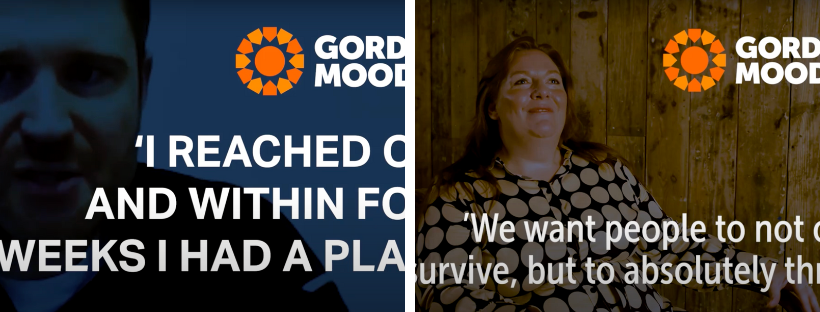
We’ve worked with the project and its partners and stakeholders to capture the learning from this process. This short video summarises the key findings from this learning journey and experimental approach to commissioning and addressing health inequalities at a local level. Take a look!

ORAL HISTORIES PROJECT

Over the past 6 months PVM have been working with Creative Minds and the Mental Health Museum, on a project looking into people’s lived experience with mental health.

A multitude of sessions have taken place across West Yorkshire, specifically in Wakefield and Huddersfield, sharing Community Reporting techniques and providing the opportunity for people to share their stories.

The project initially set out to speak to people who had a connection to the former Stanley Royd Hospital and Fieldhead Hospital, something which we were able to achieve. Head over to the Community Reporter Website to take a look through and listen to some of the stories that have been recorded as part of the project so far – including accounts from former staff members of the hospitals! What also emerged from the project was a wider collection of stories exploring people’s personal mental health journeys.

We’d like to give a huge thank you to the MHM, Creative Minds and of course everyone who took the time to share their stories and take part in the Community Reporter training sessions.

Whilst PVM’s involvement in the project will shortly be coming to an end – if you want to find out more or contribute your story get in touch with the MHM.

EUARENAS Future Scenarios Training

Last month EUARENAS partners came together for two days of training led by PVM at FACT, Liverpool.

Over the two days representatives from PVM, CRN, UEF, SWPS and the pilot cities of Gdask, Voru and Reggio Emilia engaged in a series of creative workshops, providing insight into how future scenarios can be explored using interactive play style activities. Each activity was geared towards getting groups to work collectively to imagine a future in which deliberative democracy has been achieved.

Serious Play

Groups used ‘Lego’ style building blocks to construct their vision of the future.

Collaging / Annotation

Groups worked together to create an annotated collage containing imagery and text cut out of newspapers, magazines and other printed media.

Photo Voice

Groups were provided with an instant camera, then instructed to take to the streets and capture images which represented participatory democracy. They returned to the workshop after gathering their pictures and created a visual mind map of what their future scenario could look like.

The activities were really fun to take part in and each group was able to sample each of the methods, with new ideas emerging at every stage. Following this section of the training partners reflected on each of the activities discussing the positive, negatives and potential adaptations – in preparation for the delivery of a series of future thinking workshops which are set to take place over the coming months.

On the second day partners worked within their country teams to produce an action plan for the delivery of the future thinking workshops. These plans were then peer reviewed and will now be utilised to achieve the next steps of the project.

Check out the blog post over on the EUARENAS website to find out even more about what we got up to.