EQUALITY TRUST USE COMMUNITY REPORTING TO IMAGINE “BRUM WITHOUT BARRIERS”
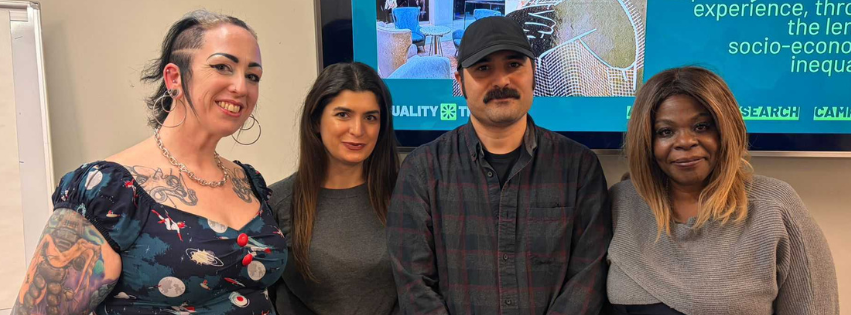
We were absolutely delighted to receive this update last week from our friends at The Equality Trust in Birmingham. People’s Voice Media have been working with the Equality Trust for the past few years to help them introduce lived experience storytelling into their work. We have trained members of the Equality Trust team so that they can deliver their own Community Reporter training. In just over 3 years, there have been a total 5 cohorts of Community Reporters, each looking at different topics focused on the realities of socio-economic inequality and aiming to impact the implementation of the Socio-economic Duty. The blog below explores the work of the most recent group of Birmingham Community Reporters, who began their project in August 2025. They recently held a workshop and film screening at the Midlands Arts Centre to share the insights they have learned from speaking to residents about their lived experiences of life in Birmingham. The event brought together residents, cultural leaders and artists to discuss how to reimagine “Brum without Barriers”. Senior Project Officer Charlie McNeill tells us more…
The Birmingham based Community Reporters on this Equality Trust project chose to look into how different experiences of accessing Arts, Culture, Entertainment and Recreation in the city can help us better understand the city’s changing landscape through a period of severe service cuts and loss of community assets, and how this impacts people from different socio-economic backgrounds.
They really wanted to be positive about the city and this was represented well in the finished film, whilst being pragmatic and honest about the challenges we are facing.
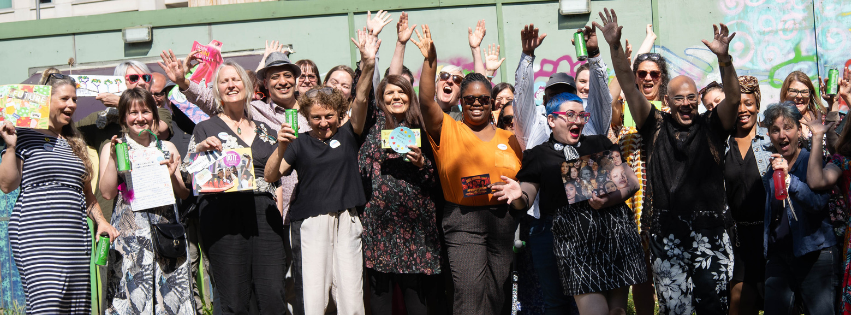
Our mobilisation event brought together some brilliant Brummies from across the city and its power spectrum, to reimagine a Brum without Barriers. We had a great day commiting to our own changes and the power we’re each going to step into to disrupt for a better city where everyone is included and able to enjoy the great wealth of culture we have to share. You can read more about the event on the Equality Trust blog.
Already this has created funding opportunities for arts activities in usually neglected parts of the city, potential for some new academic research, and has created connections between creatives to uplift queer and other marginalised voices on local community radio.
The Community Reporters Arash, Jennifer and Alev have really enjoyed their experience on this project. We’re just in the wrapping up stages now and I’m making sure they all have strong connections to People’s Voice Media and the wider Community Reporter network so that they can go on to grow their skills, connections and get involved in future projects should they wish to.
Arash, Jennifer and Alev have created a really special project capturing a really important time for our city, making some firm friendships along the way. We’re really proud of them and incredibly grateful to have had the chance to have worked with them.
We hope you enjoy the film and would love to hear what it makes you think about – Does it challenge your perceptions of Birmingham? Can you relate to any of the experiences expressed by the storytellers? What would you change in your neighbourhood to help folks feel more welcome in what’s on?