CULTURAL BRIDGE TAKES COMMUNITY REPORTERS TO COLOGNE
Today we have a guest blog from Becca, a Community Reporter from the Glenkens in Scotland and one of the participants in our Cultural Bridge project, who has just got back from an exciting exchange trip to Cologne. Over to Becca to tell us more about the project and share some of her travel diaries…thank you Becca!
Cultural Bridge is a charity which supports arts and cultural organisations across the UK and Germany to develop partnerships that explore social arts practice. This year, People’s Voice Media has teamed up with Agora Köln in a project that explores motivations for civic participation in the remote, rural Scottish area called The Glenkens, and Sülz: a suburb of Cologne.
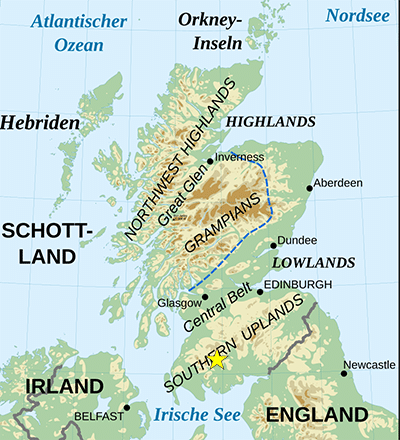
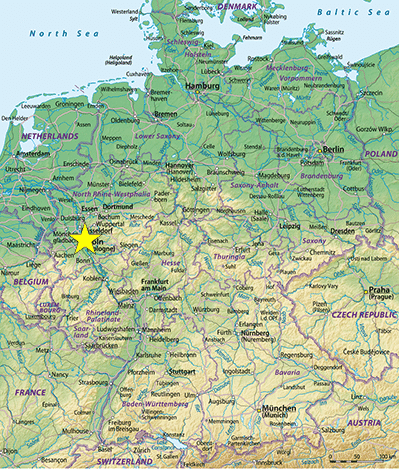
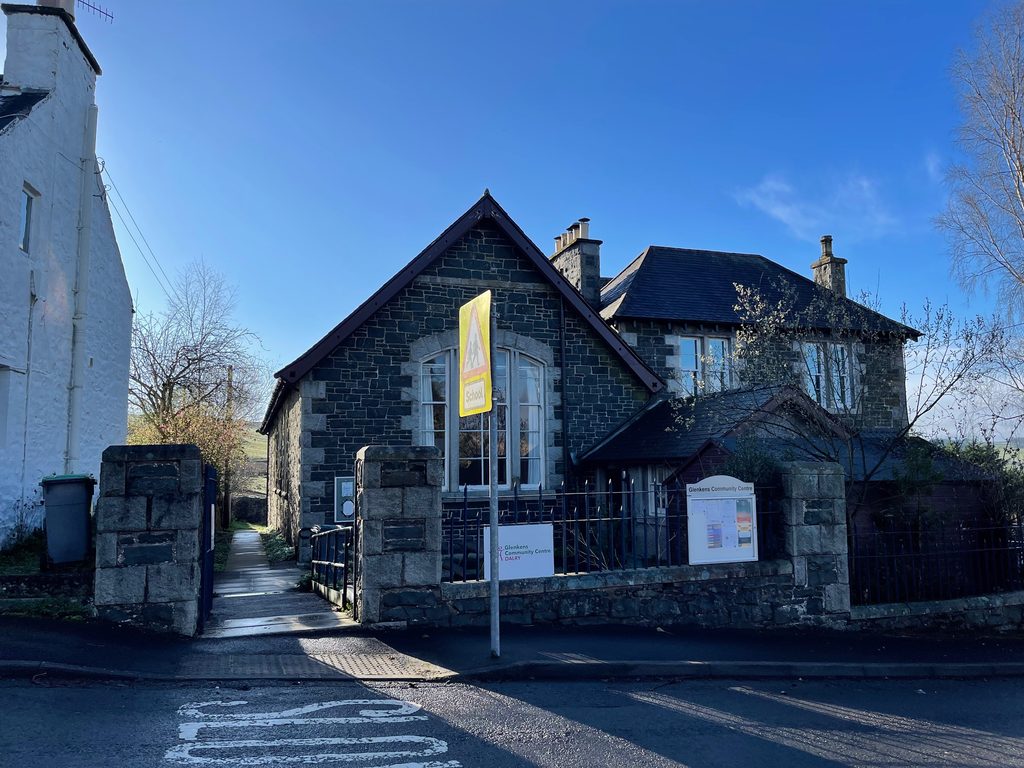
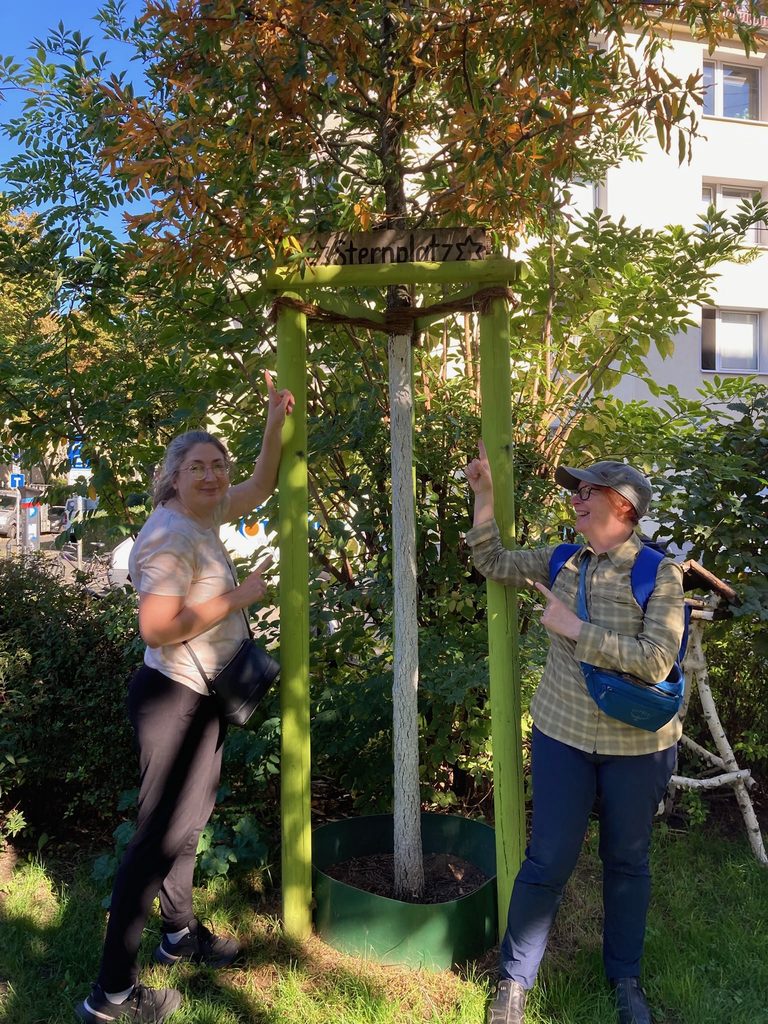
Sülz is a district of Cologne with a population of around 36000, situated in the west of the city, and is a popular residential suburb with a wealth of green spaces. The Glenkens, comprising the settlements adjoining the Water of Ken and Loch Ken, is situated in Dumfries and Galloway. Its land area is about the same size as the West Midlands region, which has a population of over 6 million. By contrast, the Glenkens population is around 4000. The project focuses on two volunteer-run spaces formerly under the control of the local authority: Sternplatz, a community greenspace and meeting place in Cologne, and the Glenkens Community Centre, which is now owned by the Dalry Community Properties Trust after a community asset transfer from Dumfries and Galloway Council.
Over the last few months, Glenkens-based volunteers have taken part in training sessions to become community reporters, interviewing other volunteers from the area using their newly learned techniques. And following an initial zoom meeting where the team met their German counterparts, the first section of the exchange trip took place in early October when Kath, Sarah and Becca (who has written this blog) flew from Edinburgh to Cologne for a three day visit.
Trip Diary – Monday 5th October
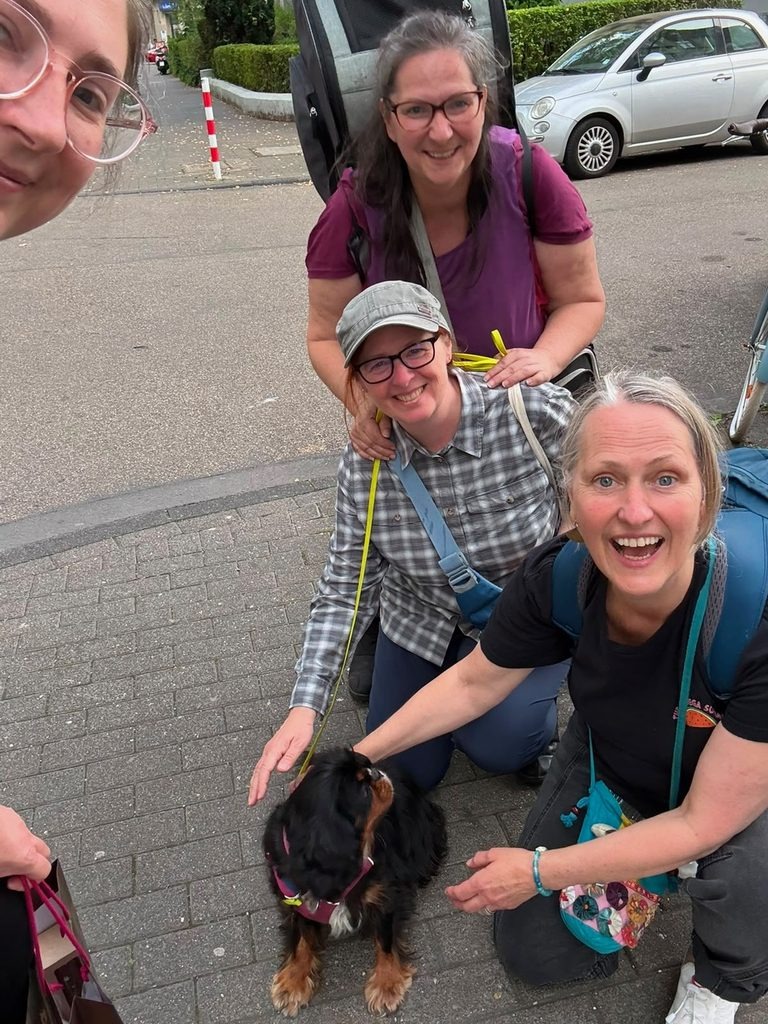
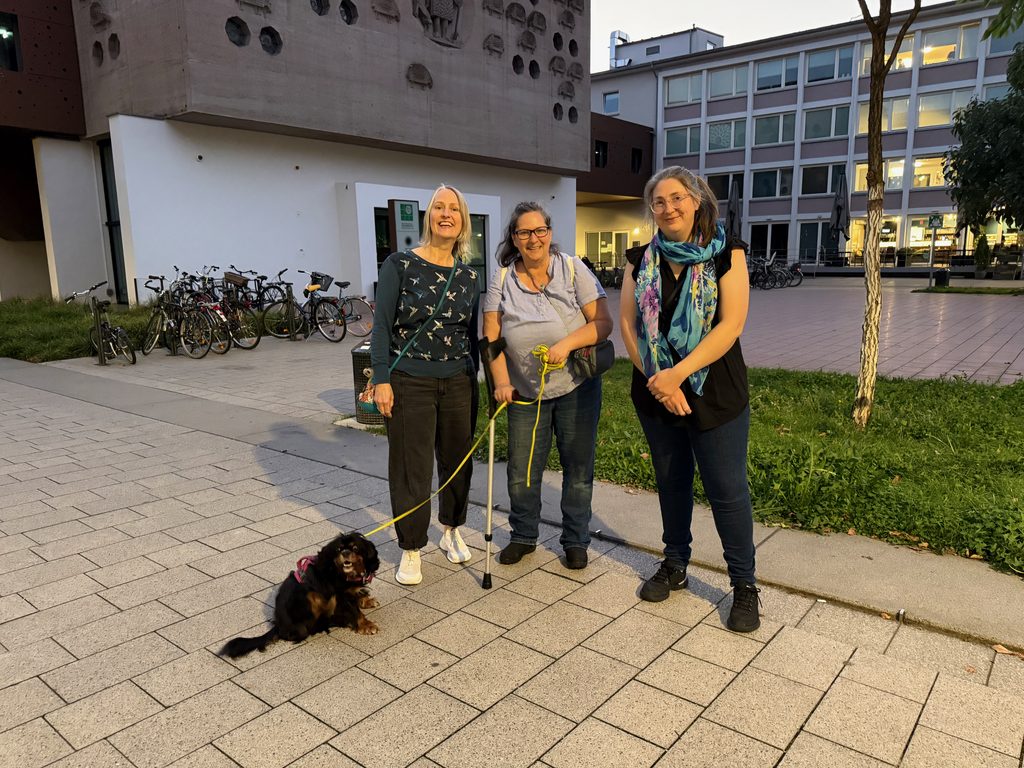
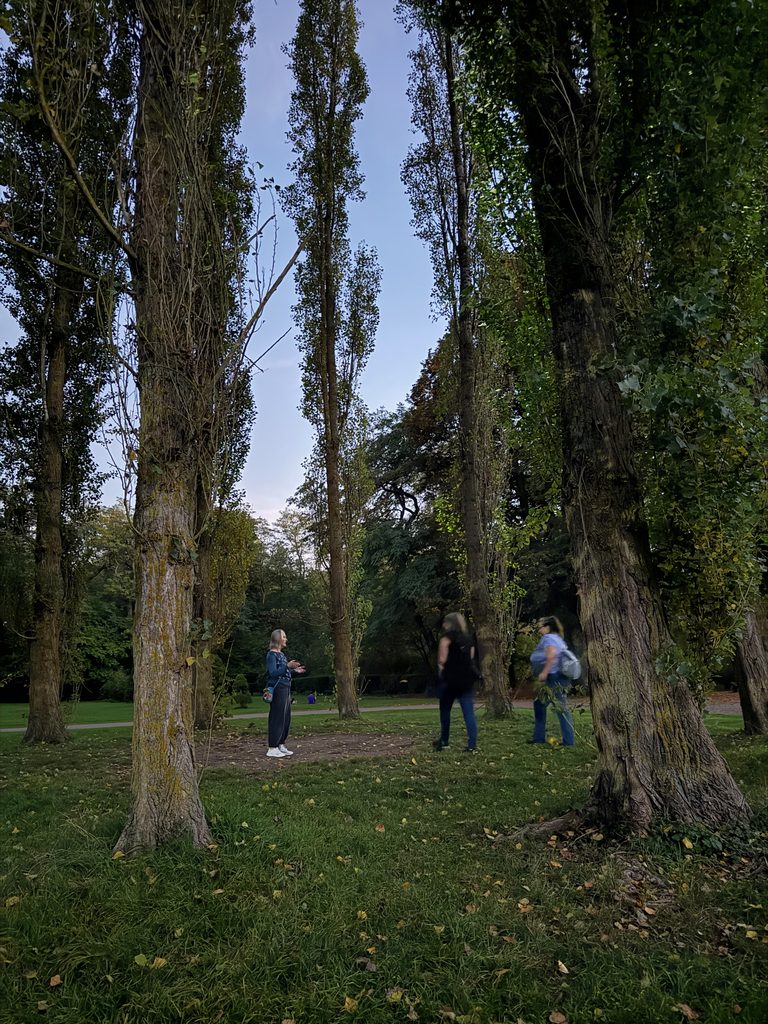
Arriving in Sülz in the early evening, we met up with Gabi from Agora Köln (as well as Maggie, her inseparable canine companion) for a quick look around the area before darkness settled. We visited Beethoven Park, and Gabi took us to see the Witches’ Circle – an instant link with the Glenkens, as we have our own legendary Witches Score on Waterside Hill! Although the legend is that the circle was scored onto the hill to keep the witches out… Gabi showed us some of the local sights, and outlined our itinerary for the next two days, which were going to be packed with meetings and opportunities to learn more about volunteering opportunities and motivations in Cologne.
Trip Diary – Tuesday 6th October
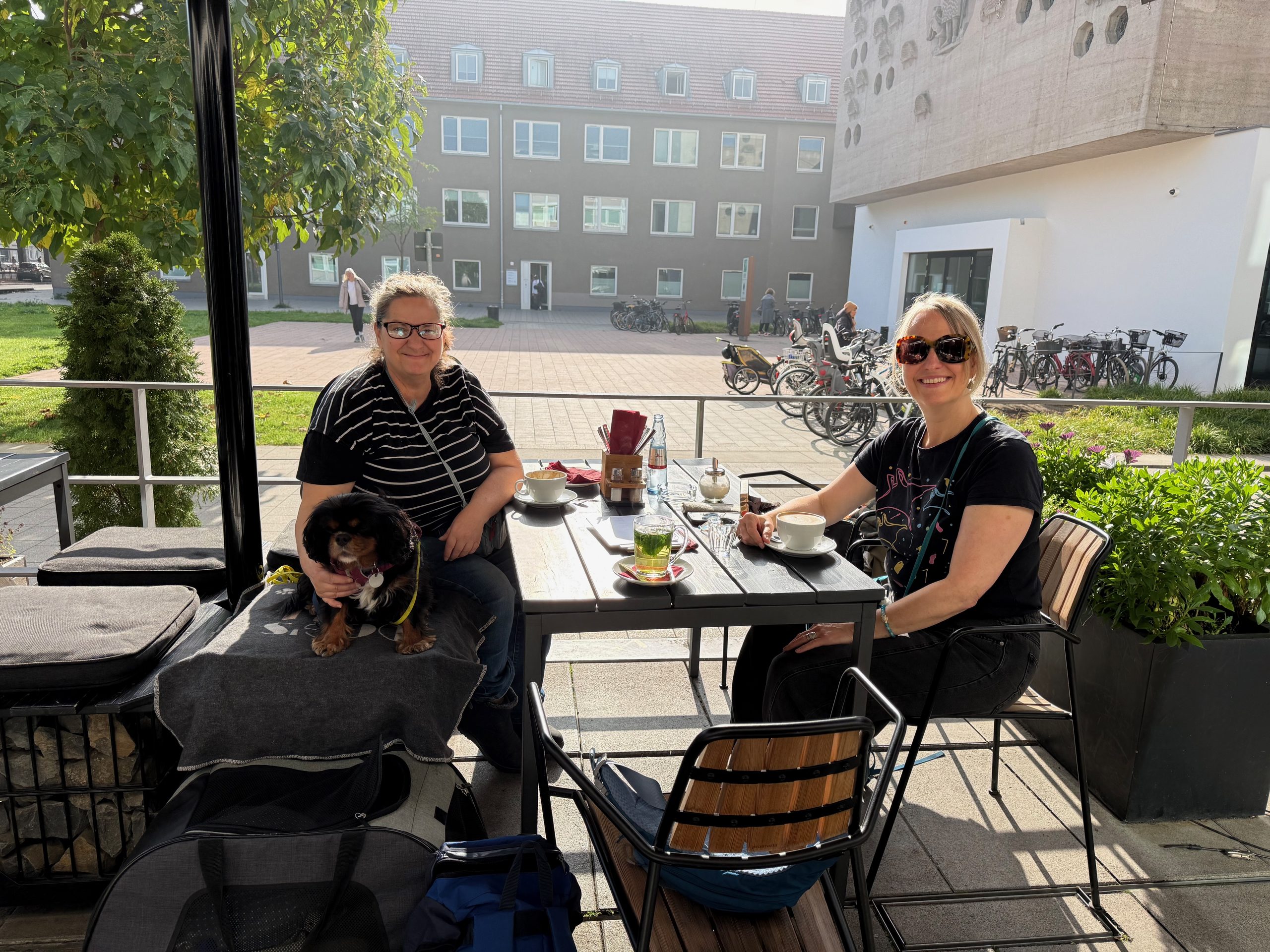
We breakfasted in the sun with Gabi and Maggie at “Wo ist Tom?”, an inclusive café founded by Lebenshilfe Köln to provide employment opportunities for people with disabilities – similar to The Usual Place in Dumfries. Suitably fortified, we set out to learn more about some of the community projects in Sülz, guided by Gabi.
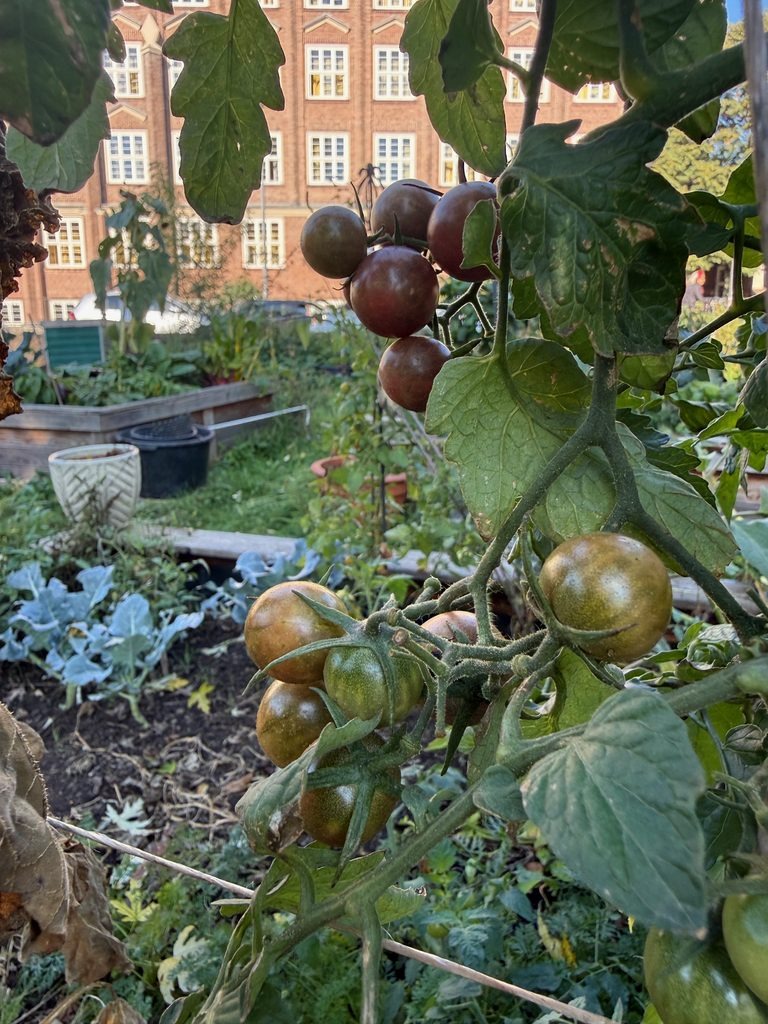
First, we visited the Sülzer Triangel urban garden, one of the many projects of an amazing organisation called Schmitzundkunzt (more later….). In 2023, residents worked together to build the raised beds that they would then take responsibility for over the coming year (watch the video here!), with one section of the garden allocated to Theodor-Heuss-Realschule, a secondary school overlooking the site. Support from the local council and parks department was vital, as the triangle is situated in a landscape conservation area, and fruit and vegetable growing on site would have been very difficult without the support of the local authority in granting access to the city’s water supply for onsite irrigation.
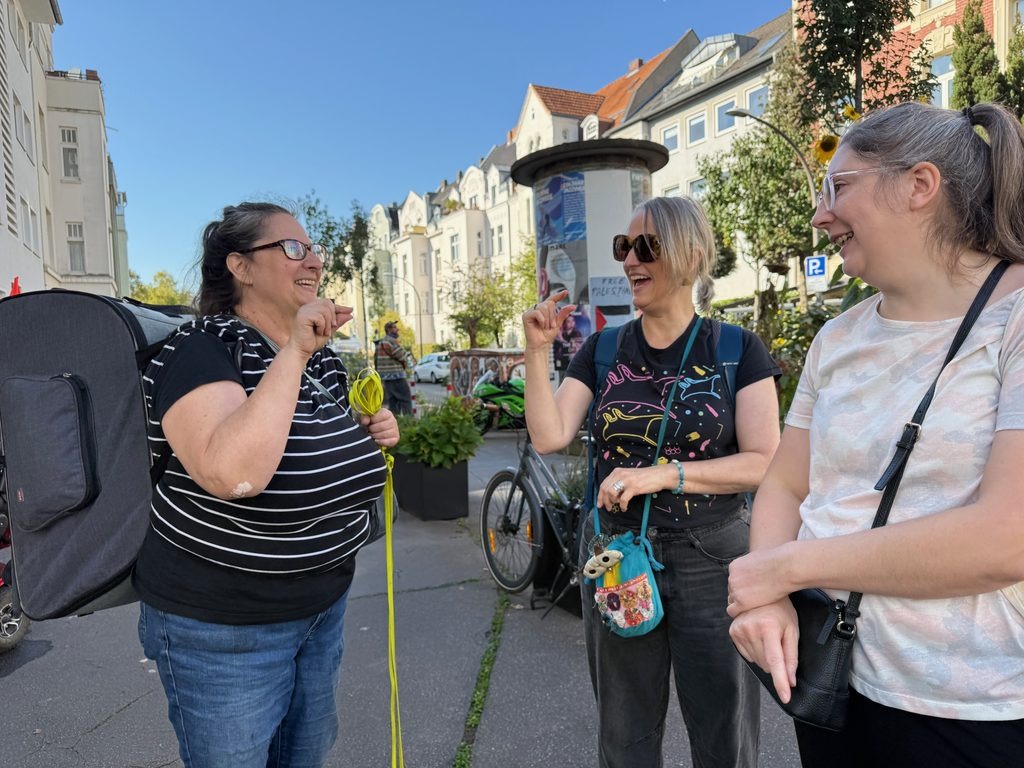
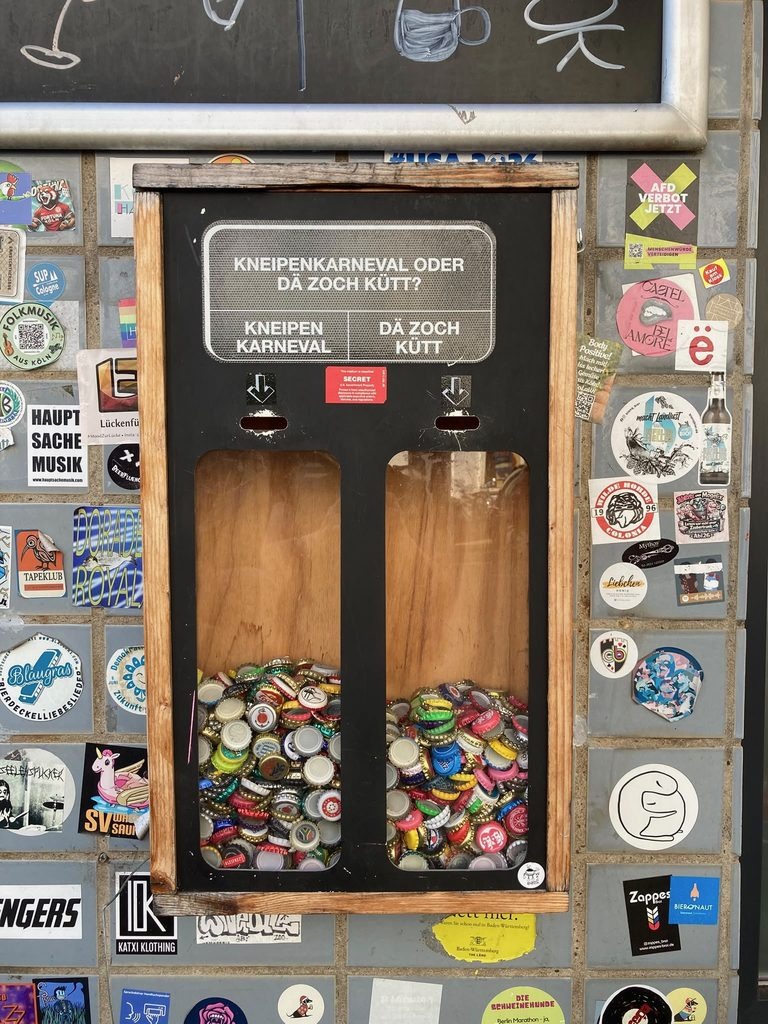
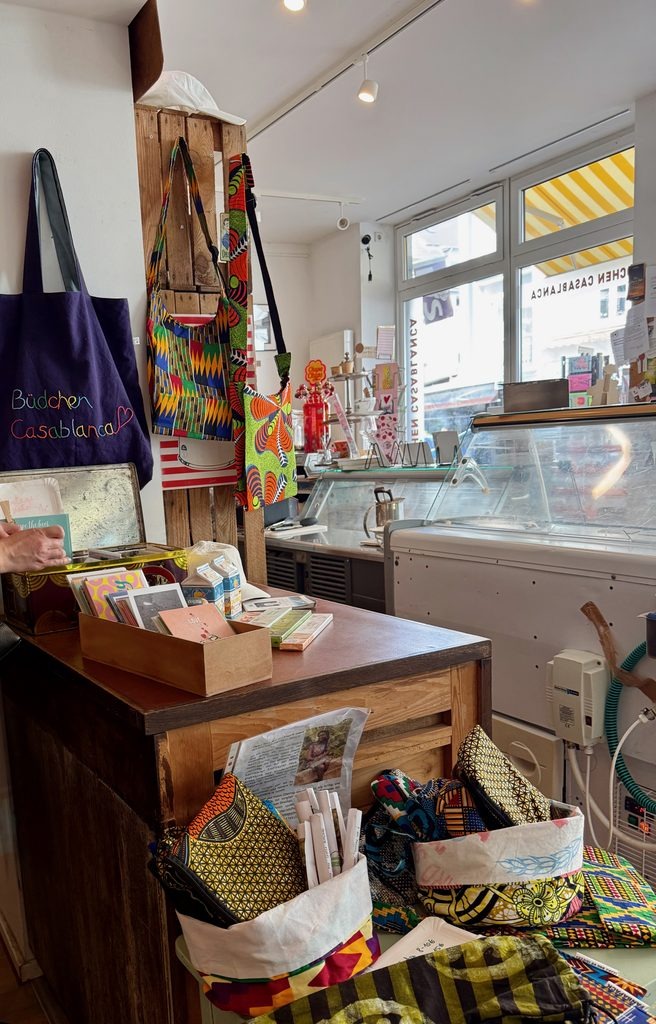
From here, Gabi led us through the streets of Sülz for a whistle-stop tour of other interesting projects. We saw some giant Sülz Sunflowers and visited the market. Next, we visited Büdchen Casablanca. A Büdchen is a small convenience store, also known as a Kiosk; primarily selling food and drink, some offer a far wider range of goods on sale or even host events. Büdchen Casablanca offers the traditional confectionery, newspaper, wines and spirits, but also a vintage market and upcycled crafts. People can enjoy food and drink at the Büdchen, and this small space also hosts cultural events including live music.
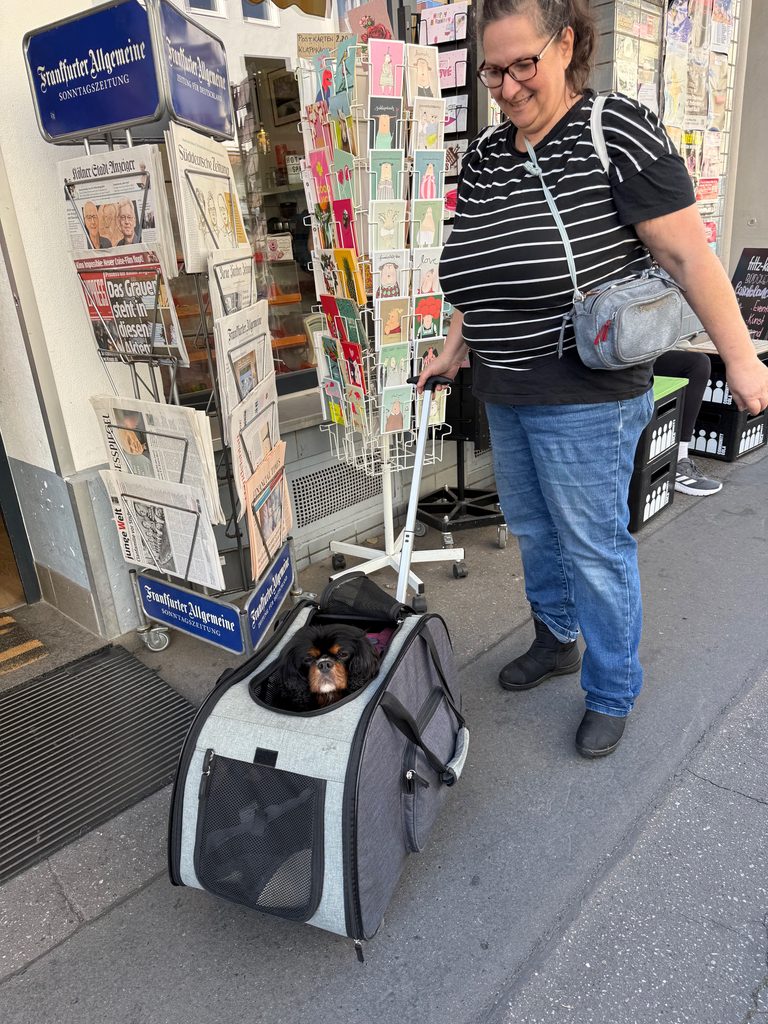
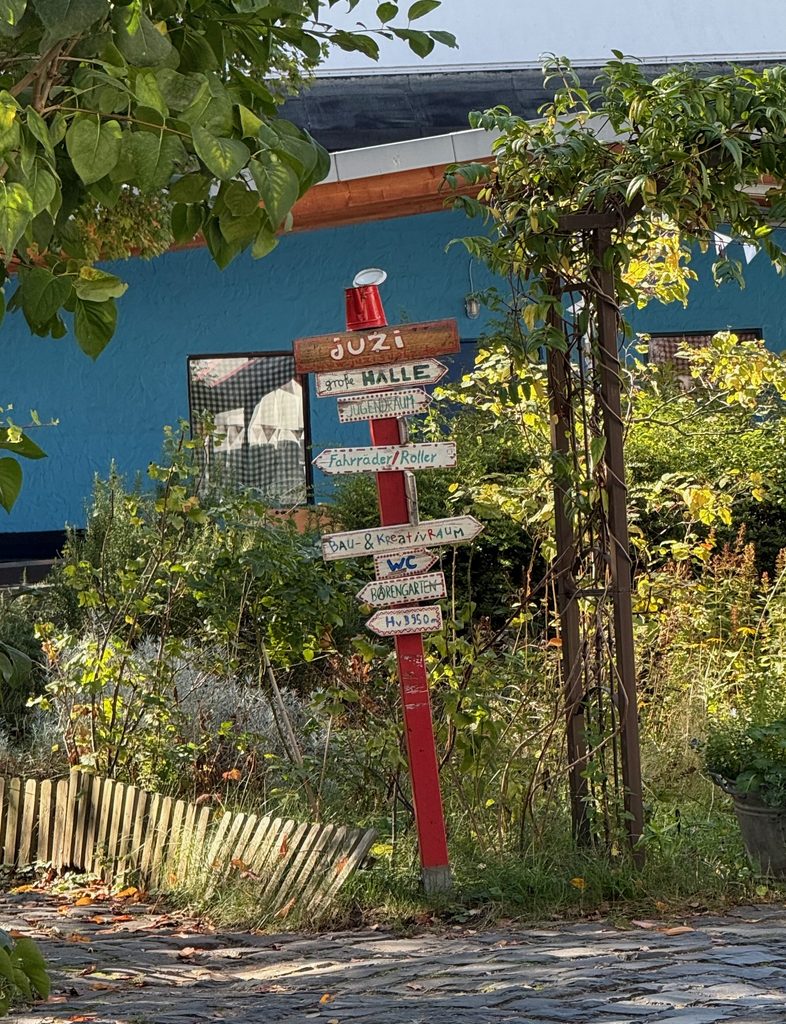
Gabi pointed out Juzi – a state-funded youth space which hosts classes, after school clubs, school holiday childcare, and a place to access support from youth workers. The facility was founded in the 1908s as a community initiative, and has since expanded from a volunteer-run space for older teenagers to its current status as a ‘haus für alle’ – house for everyone – catering for children and young people of all ages. As the centre was in use, we weren’t able to go into the building, but popped into its pleasant, shady garden.
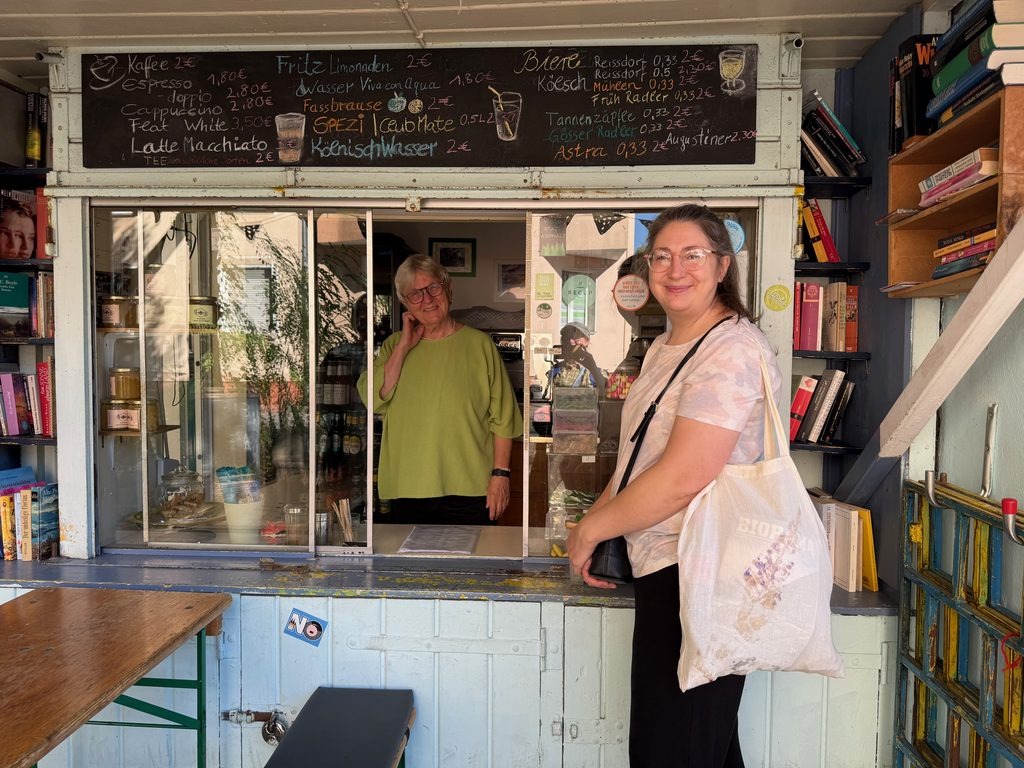
Our next stop was another Büdchen offering refreshments and culture – Büdchen am Nikolausplatz, where we met Madalen, one of the regular volunteers at the Kiosk. Unlike Büdchen Casablanca, this is a volunteer-run space featuring a free book swap library, and the kiosk offers snacks, hot and cold drinks, as well as concerts and community sing-along events. We discussed the difficulties of balancing volunteering with work time but also the way that such community spaces are vital as a place to bring people of all ages together.
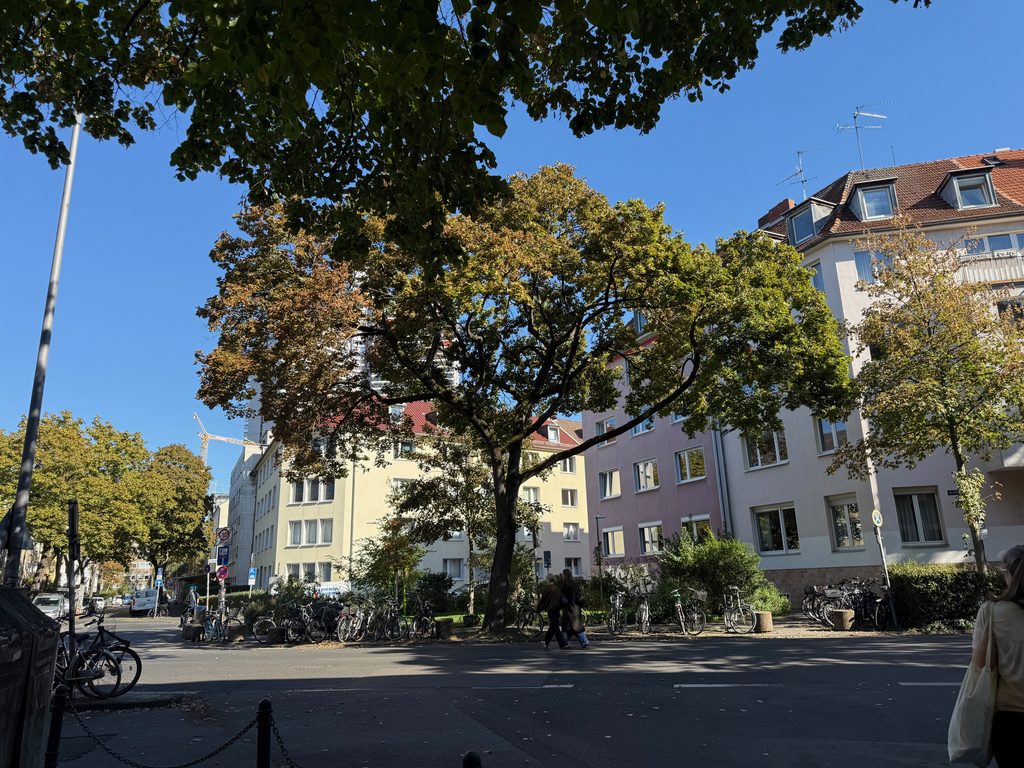
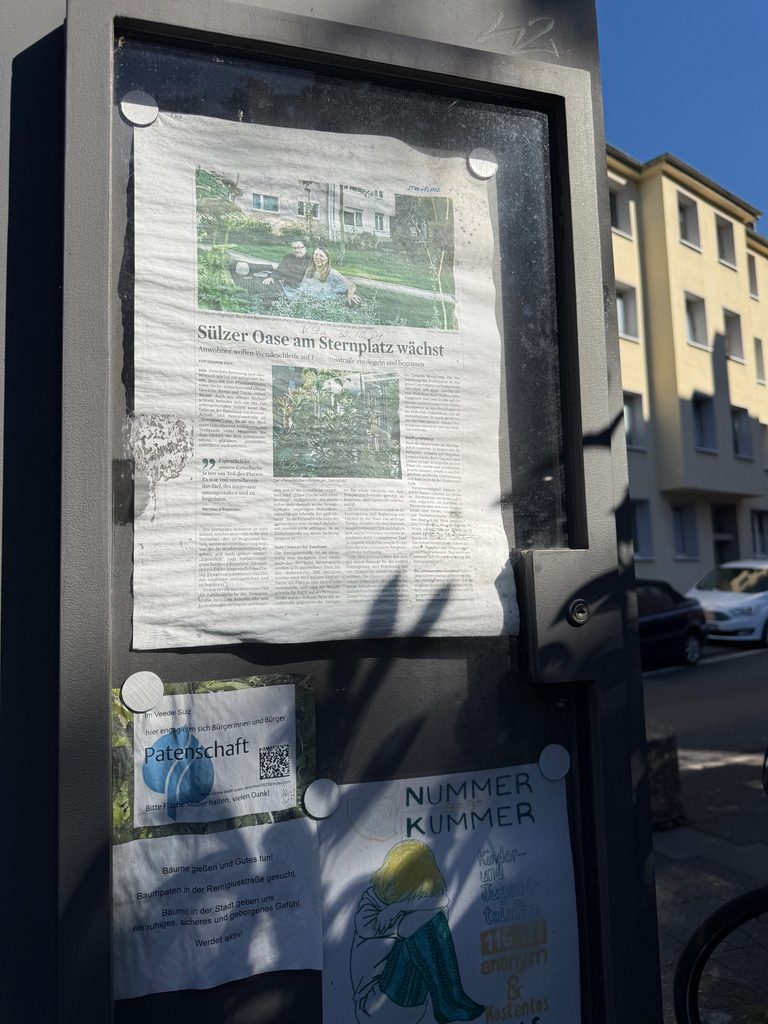
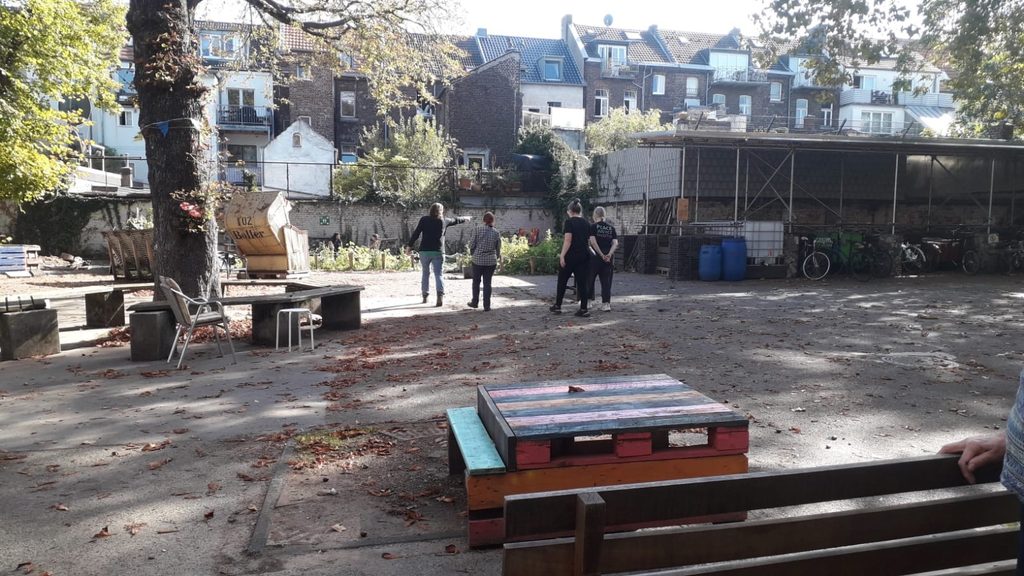
We had a flying visit to take our first look at Sternplatz. It was great to see it in person, having looked at photos and chatted with some of the Sternplatz volunteers on Zoom about the work that led to it becoming a treasured community space, and the challenges that had been encountered on the way. Then it was on for a coffee at Impact Café, linked to the Impact Coffee roastery, a Cologne-based startup which roasts Ethiopian coffee beans, and invests profits back into projects in Ethiopia promoting the reuse and recycling of plastic.
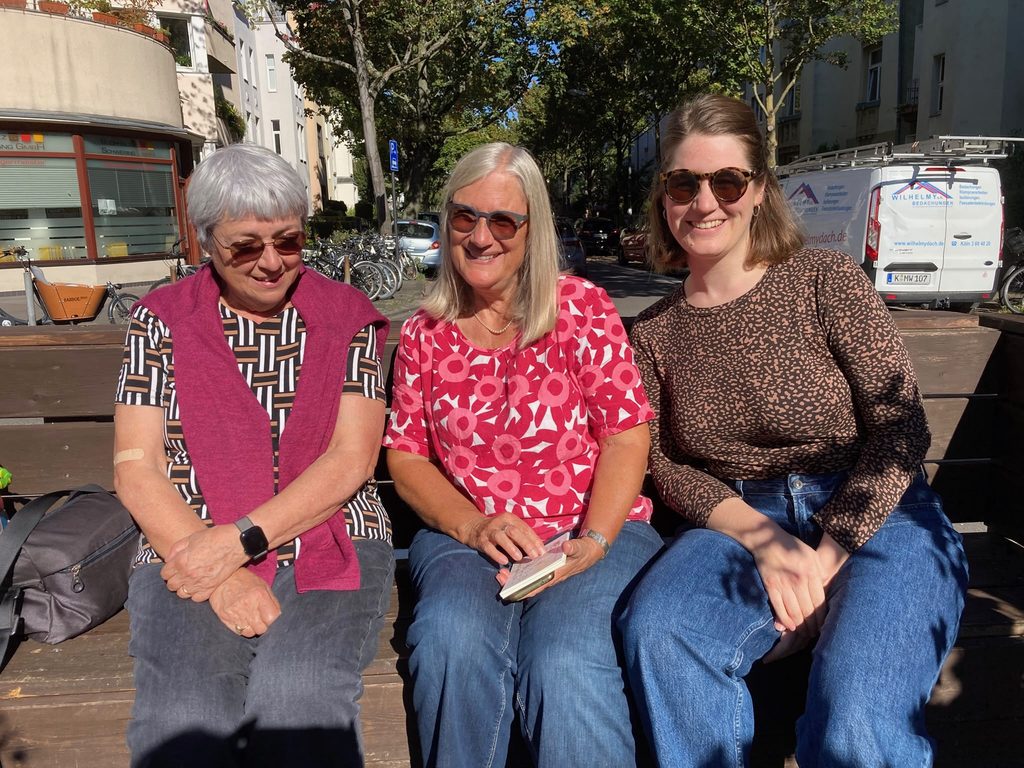
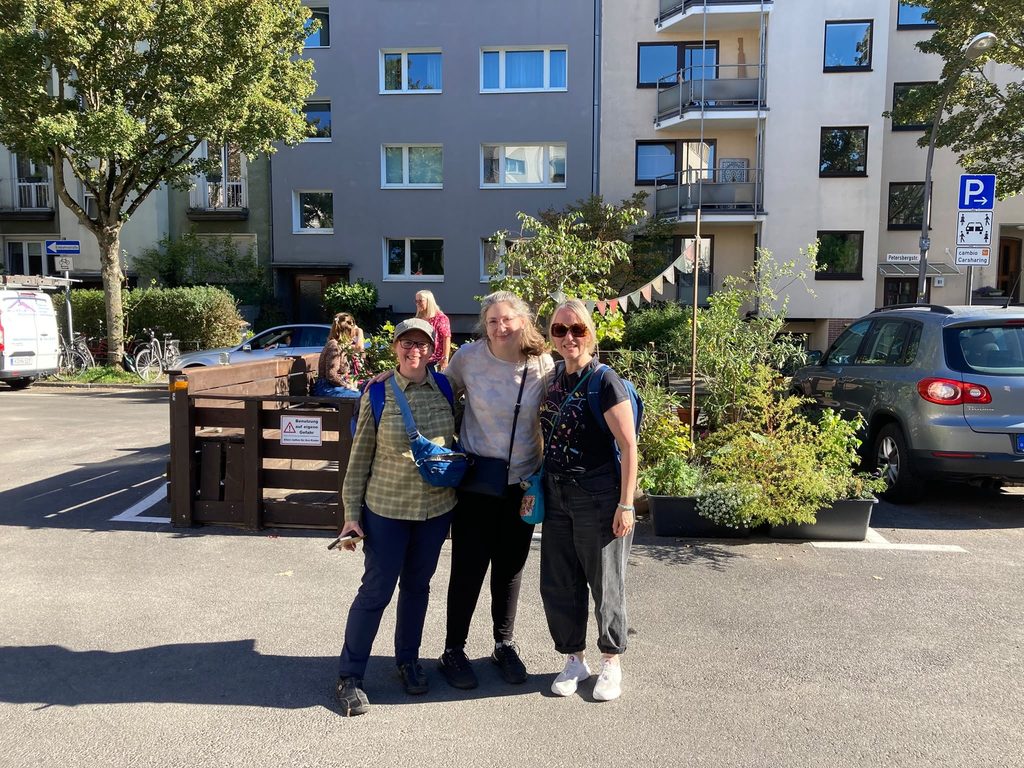
Then – on to Klettenplätzchen, a small community space with ambitions to expand, reclaimed for the community from cars by occupying parking spaces. We met four of the volunteers involved in the project, which grew from an experimental space where planters were used to mark out two parking spaces for people to sit and socialise, to the current setup, where the bench and planters are on a raised decking area. Volunteers commented that some drivers have expressed annoyance at parking being given over to this people-focused area, but express no annoyance at the other parked cars, which sit there unused for the vast majority of the time. By contrast, the seating area is used throughout the day and evening as a meeting place and a place to sit in the sun, read a book or chat.
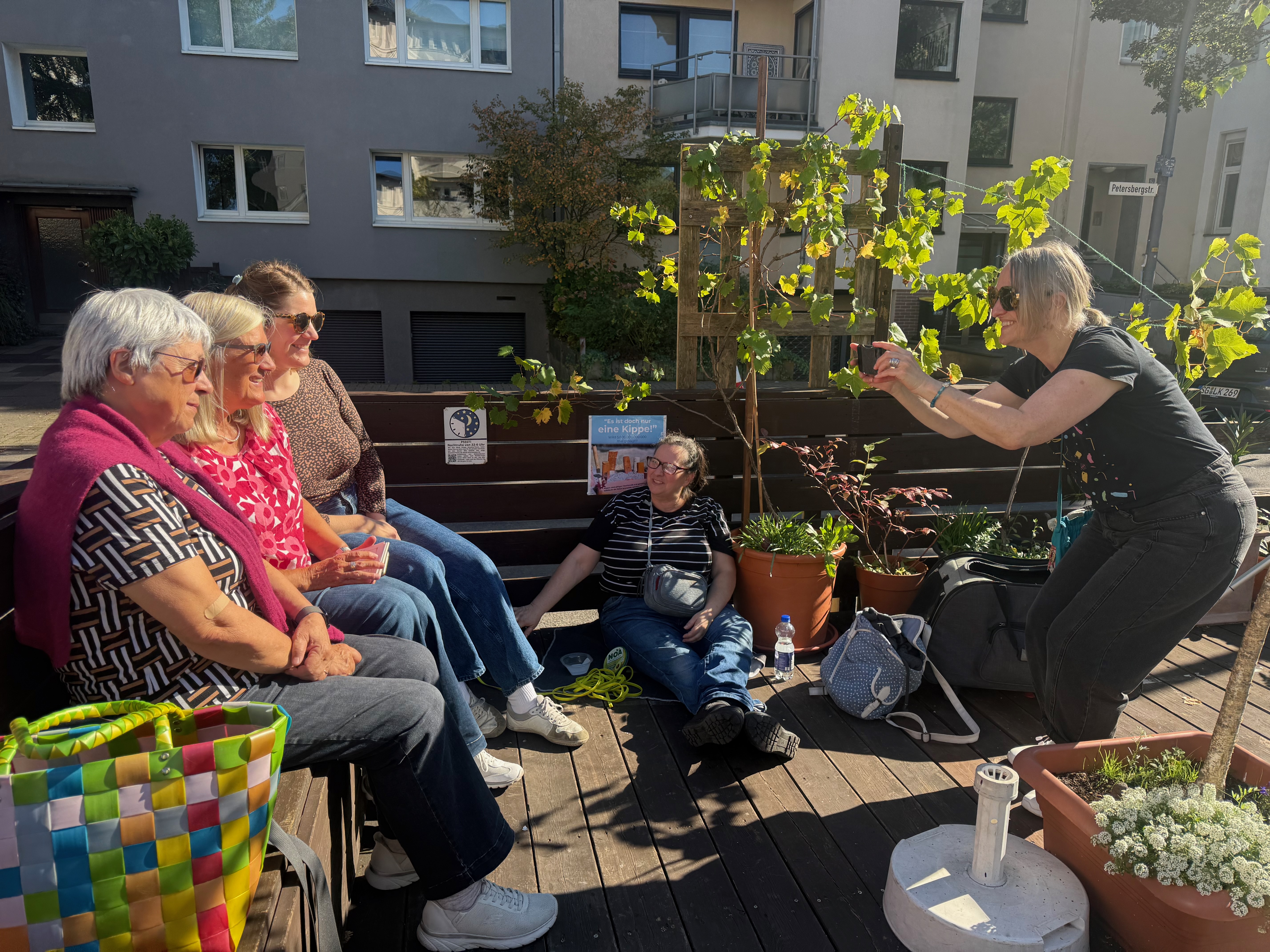
The temporary structure has the permission of the local authority to remain in place, and the group hopes that it may be possible to expand into a further parking space in future. The fact that what feels like a spacious, green seating area can fit into just two parking spaces really demonstrates what a wasteful use of space cars are, particularly in a city like Cologne which has such brilliant public transport and (in many places) good cycle infrastructure. All of the volunteers that we chatted to had lived in the area for some time, but had not met until the Klettenplätzchen project started, demonstrating again the benefits that community-led spaces that are open to all can bring.
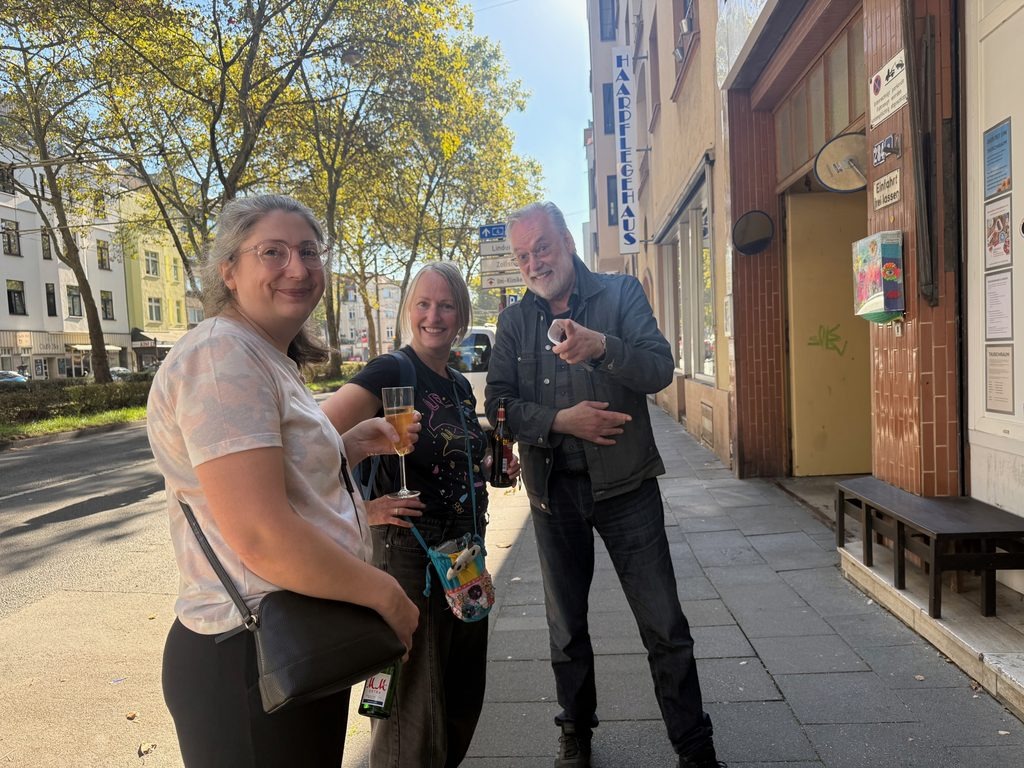
Our next stop was SchmitzundKunzt’s headquarters on Luxemburgerstraße. This organisation, founded by Günter “Günni” Schmitt, supports and runs a huge range of projects to further sustainability, community and creativity in the local area and beyond. Hartwig welcomed us and introduced us to Günni before taking us on a tour round the building. First, we visited the ‘Dingsbums Tausch’ or ‘thingymajig exchange’ – a place where people can donate unwanted goods, or collect for free, which aims to reduce consumer waste, and support people who need something to reuse rather than buying new. It’s a light, attractive space full of useful and interesting things – and there is also the opportunity to reycyle items like corks, CDs etc., all of which go to raise funds for other organisations. Financial donations are invited at a ‘pay what you can afford’ level to ensure that the space works for those in financial hardship.
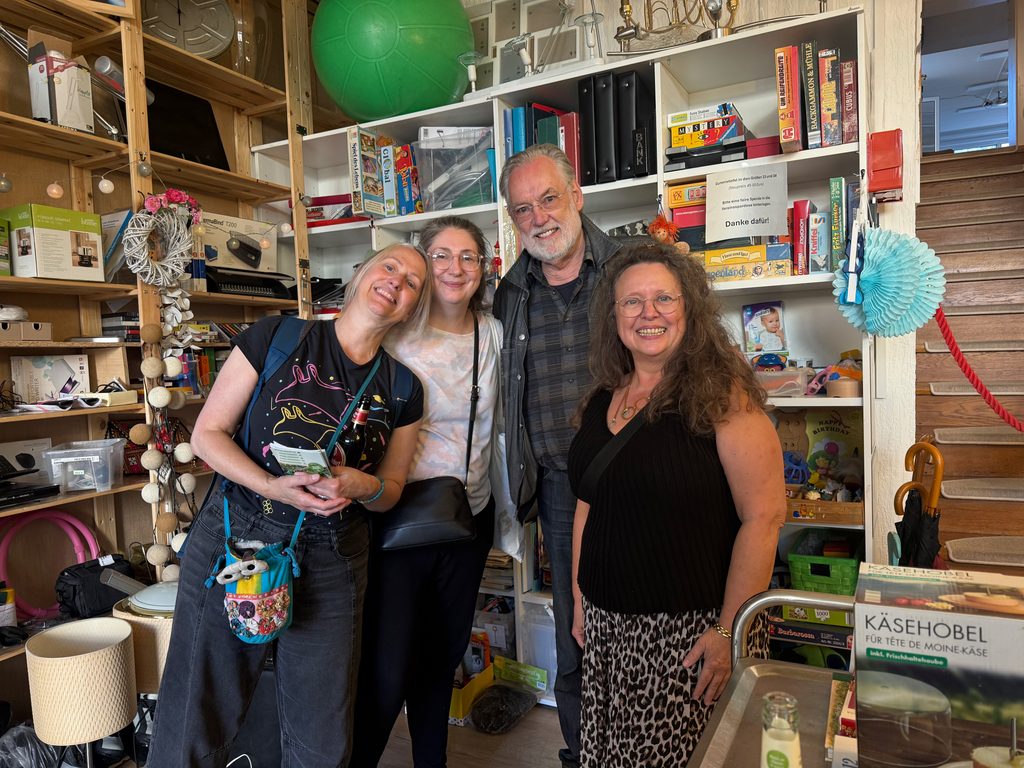
Upstairs is the studio space, hosting a resident artist and a range of sessions including arts, crafts and DIY meetups and classes. Other projects include urban gardening (the Sülz Triangel that we visited earlier and others), plant exchanges (rescuing plants otherwise destined for disposal), bike hire (including cargo bikes and e-bikes) and cycle servicing, a repair café…. We had a really positive chat with Hartwig, Günni and many of the other volunteers active at Schmitzundkunzt after our tour, all of us keen to build further links between The Glenkens and Sülz that outlive this project. We were also coached in the correct way to toast in German (clinking the bottom of glasses and maintaining eye-contact throughout) – vital information for a true cultural exchange!
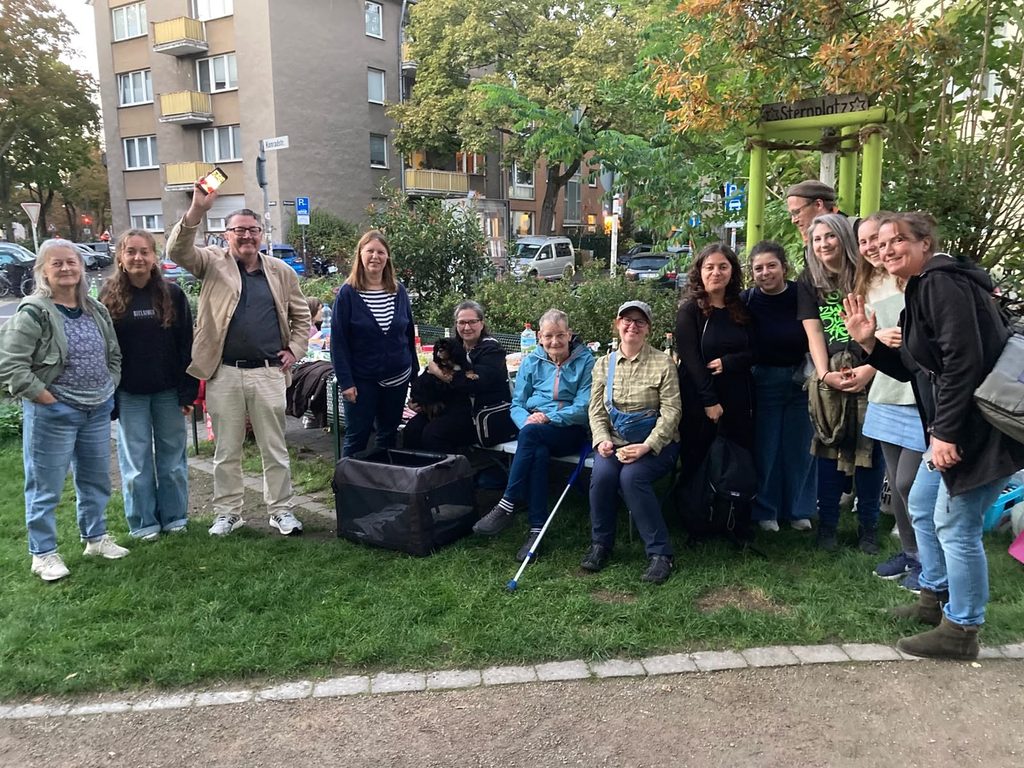
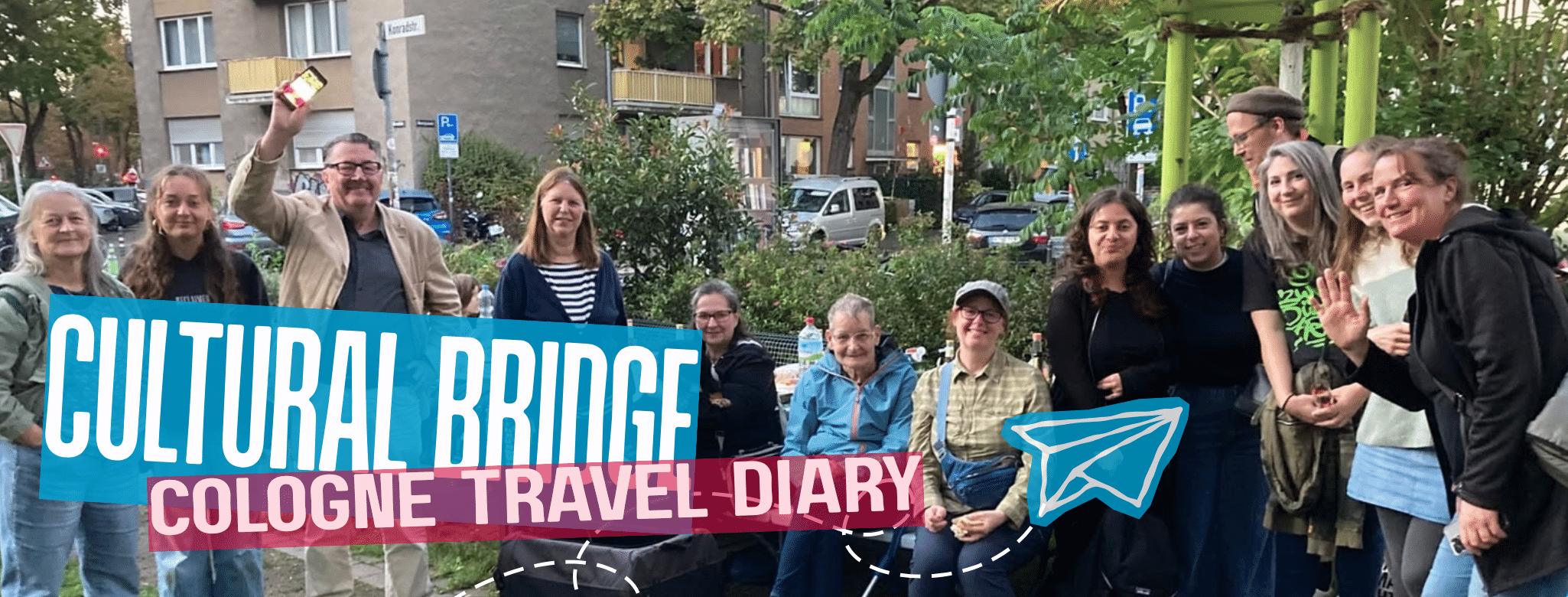
Tuesday wrapped up with a lovely gathering in Sternplatz – a chance to meet the Sternplatz volunteers and representatives of other local groups in person and to experience how the space works as an informal gathering place for sharing food and drink and conversation. It was also great to chat with representatives of project funders Cultural Bridge. As well as conversations around local volunteering, we also chatted about social justice, standing together against the rise of racism and other discrimination in society fuelled by social media disinformation, and being stronger when we work together.
Trip diary – Wednesday 7th October
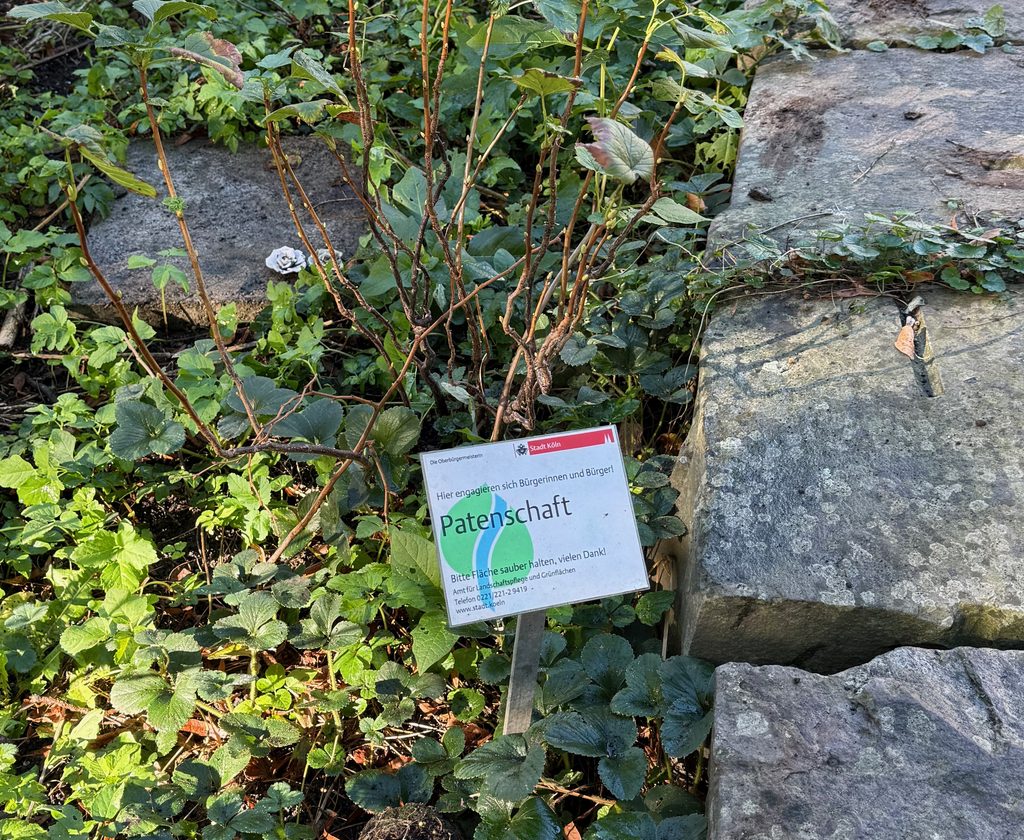
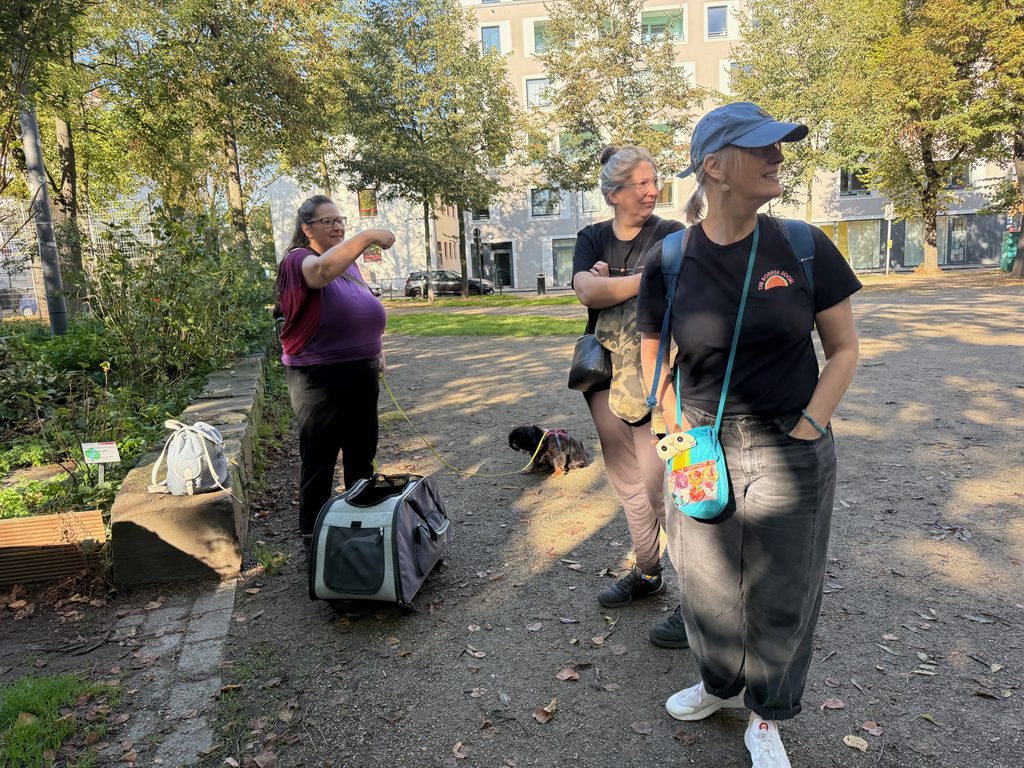
After breakfast, we met up with Gabi and Maggie to set off for Ehrenfeld, another neighbourhood of Cologne. Our walk took us past another community garden with raised beds and patches of ground with ‘Patenschaft’ markers. These markers can be seen on planted patches throughout the area, signifying that members of the community had applied and received approval from the local authority to take over their stewardship.
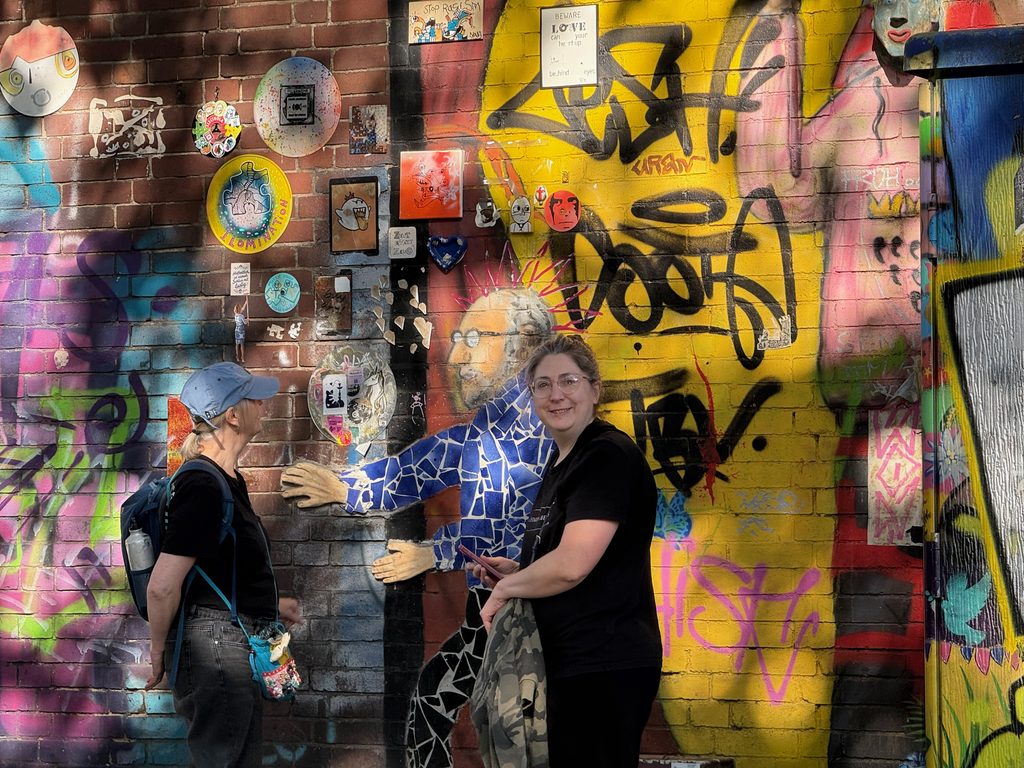
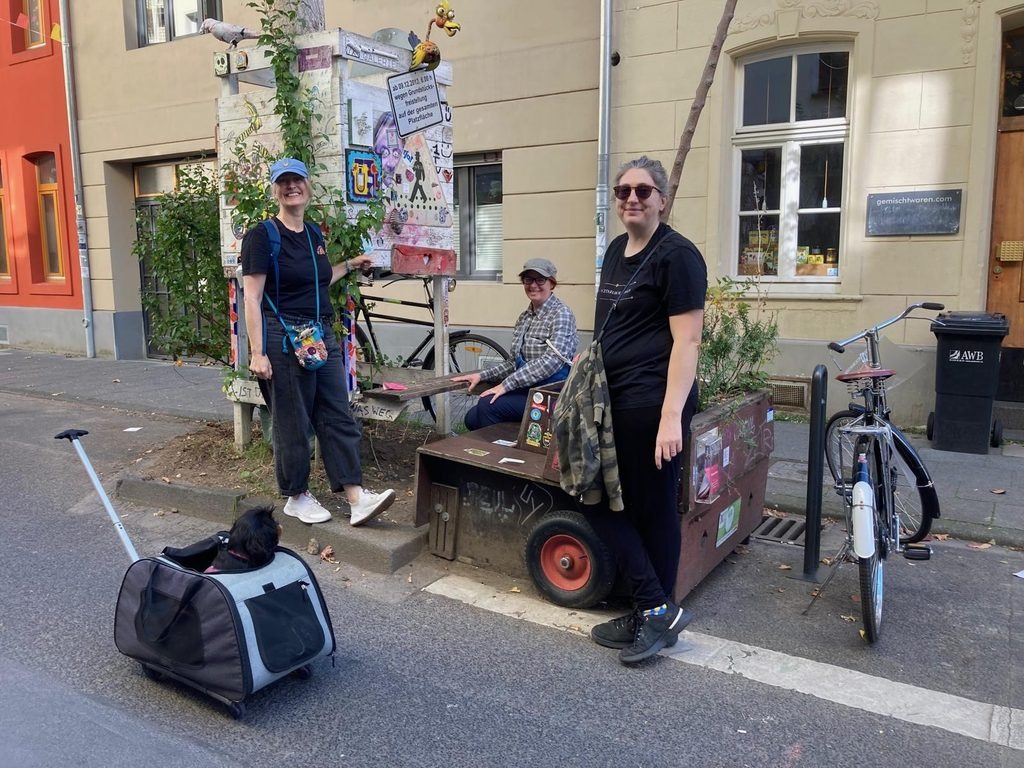
Gabi planned a route to take us past the historic Neptune Baths before seeing some of the street art which the area is known for – including murals (some with 3d elements), graffiti, moveable art trains which can be relocated at the request of residents who want to host it on their street for a while, stencils, stickers… All together makes for a lively and colourful neighbourhood.
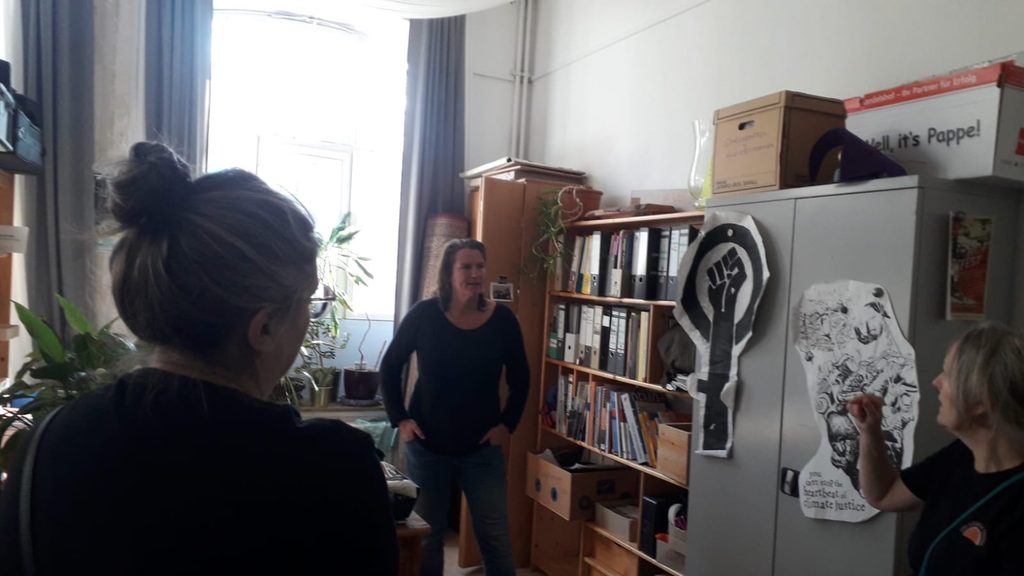
The Allerwelthaus was our next stop. This former school is now an intercultural meeting centre which works to combat racism and the politics of social exclusion, offering education, support, orientation and a meeting place to support and empower those who are marginalised and disadvantaged.
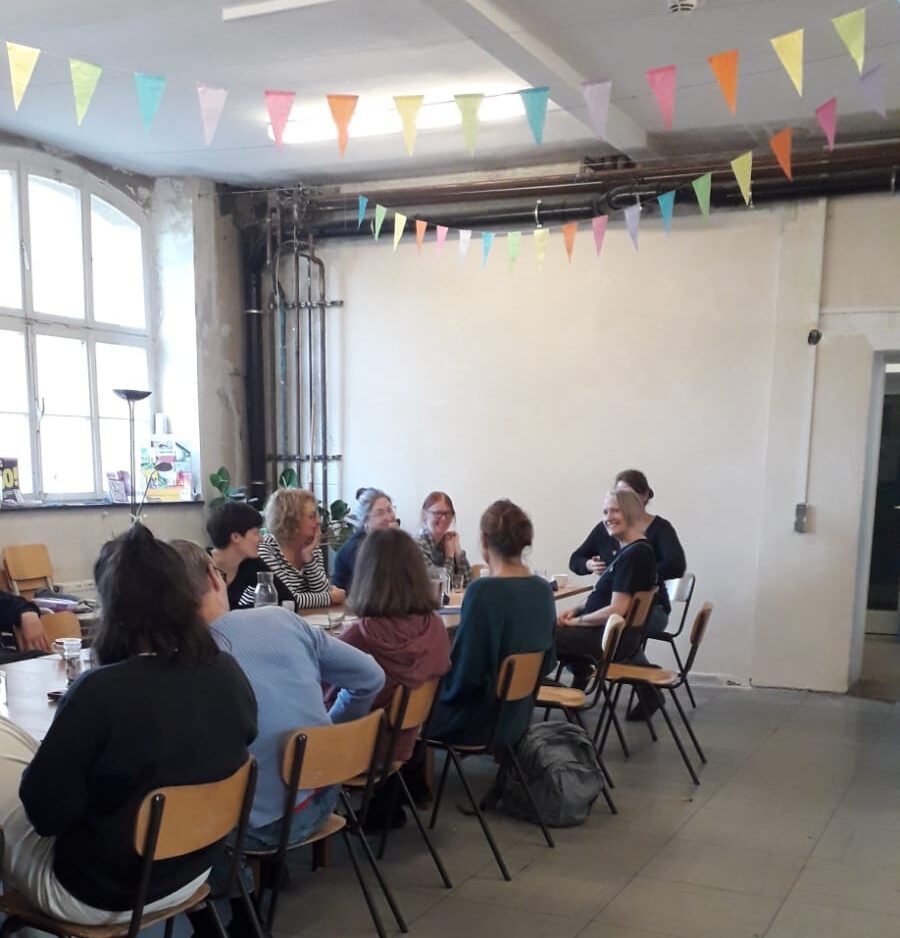
Julia gave us a tour around the building, which was full of activity. German language classes were taking place at a range of levels, from complete beginner to advanced. There is a theatre space and an art studio, a dining hall, another classroom where yoga lessons were taking place at the time of our visit, as well as staff offices. In the outdoor space there is a covered seating area, permaculture beds, and regular opportunities for volunteer involvement.
Allerweltshaus is an inspiring organisation, full of activity and energy, clearly making a positive difference for so many people, responding to and led by the needs of its users. Following our tour, we were invited to join the Allerweltshaus team for a delicious lunch, cooked by Mohammad, their talented volunteer chef. We chatted about the differences and similarities between the Glenkens and Cologne, volunteering and civic participation and our respective organisations.
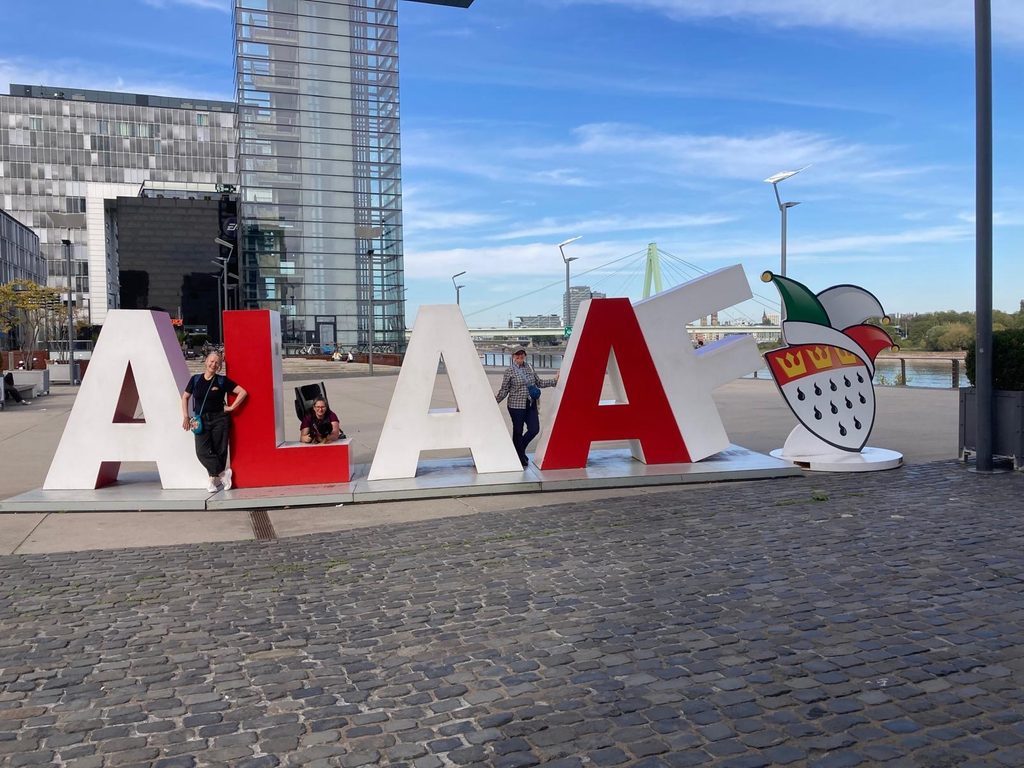
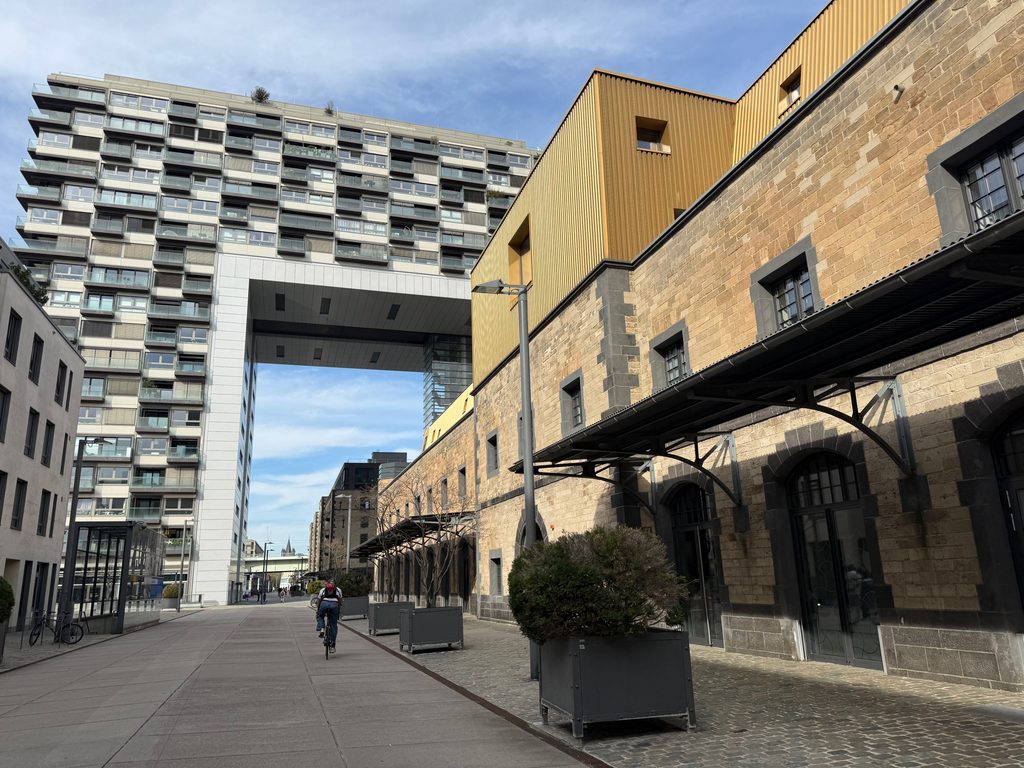
Having spent all our time in Cologne so far in the more residential neighbourhoods of Sülz and Ehrenfeld, we set out to visit some of the tourist hotspots – first, Gabi told us all about the carnival traditions in Cologne. Unfortunately this happens in February, so we weren’t around! However, the tradition is to shout ‘Kölle Alaaf’ which means (as I understand) ‘Cologne is better than anywhere else’ – which is why the word ‘alaaf’ stands on the harbourside beside the city crest wearing a jester’s hat. Behind this can be seen the Crane Houses which feature a design first conceived of by El Lissitzky in 1924, then updated and realised in the early 2000s.
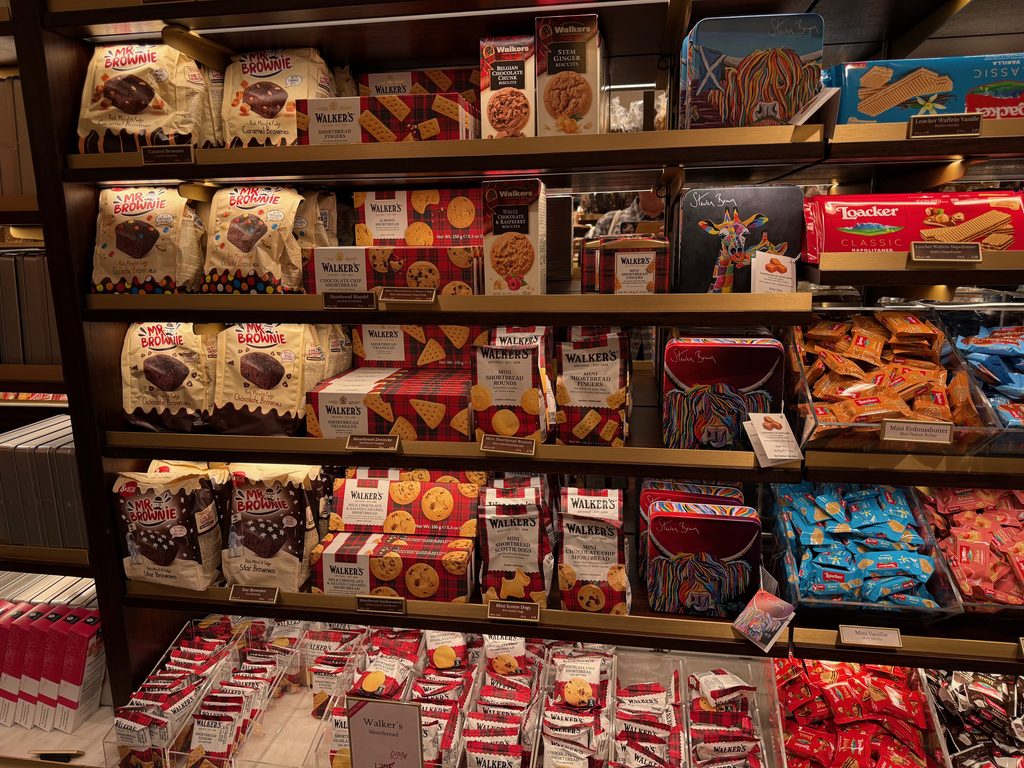
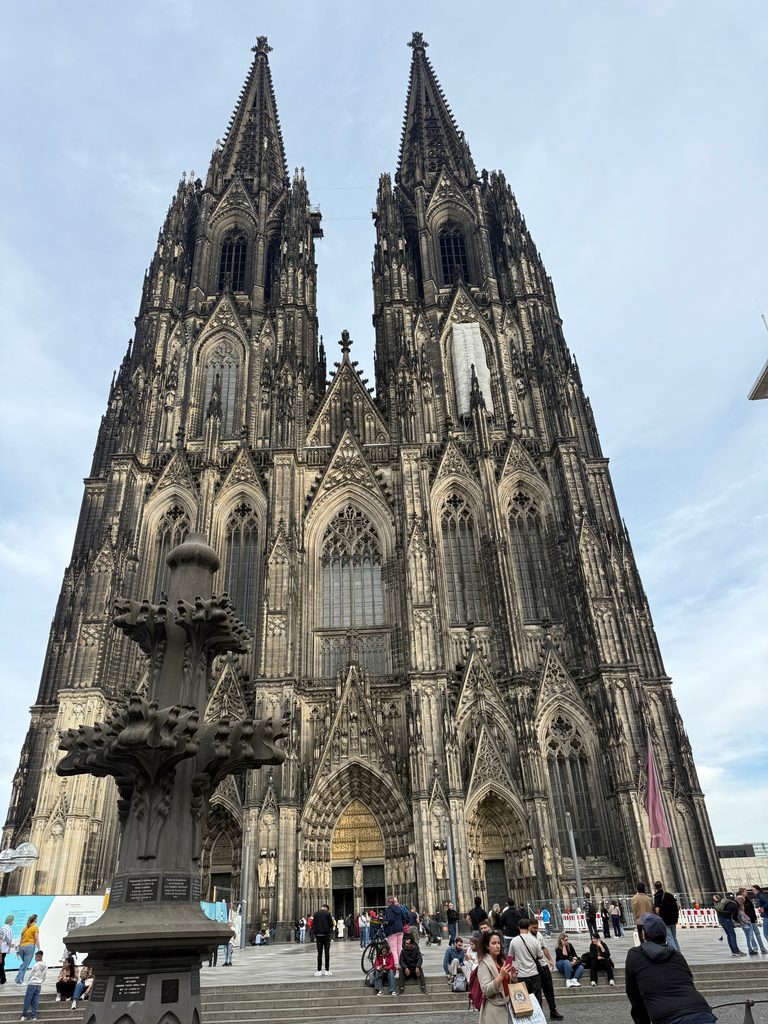
The Chocolate Museum was nearby, and alongside the giant variety of confectionery items in the gift shop we were amused to see a generous selection of Scottish produce, including highland cattle painted by an artist based in neighbouring Ayrshire! We then caught the ‘Bimmelbahn’ or Chocolate Train, which gave us the opportunity to see some of the sights in the Old Town before we got out at the very impressive Cathedral. Gabi and Maggie were extremely patient – and when we had finished our sightseeing, Gabi very kindly presented us with a gift to remember our trip – a glass each with the cathedral spires on, and some Eau de Cologne.
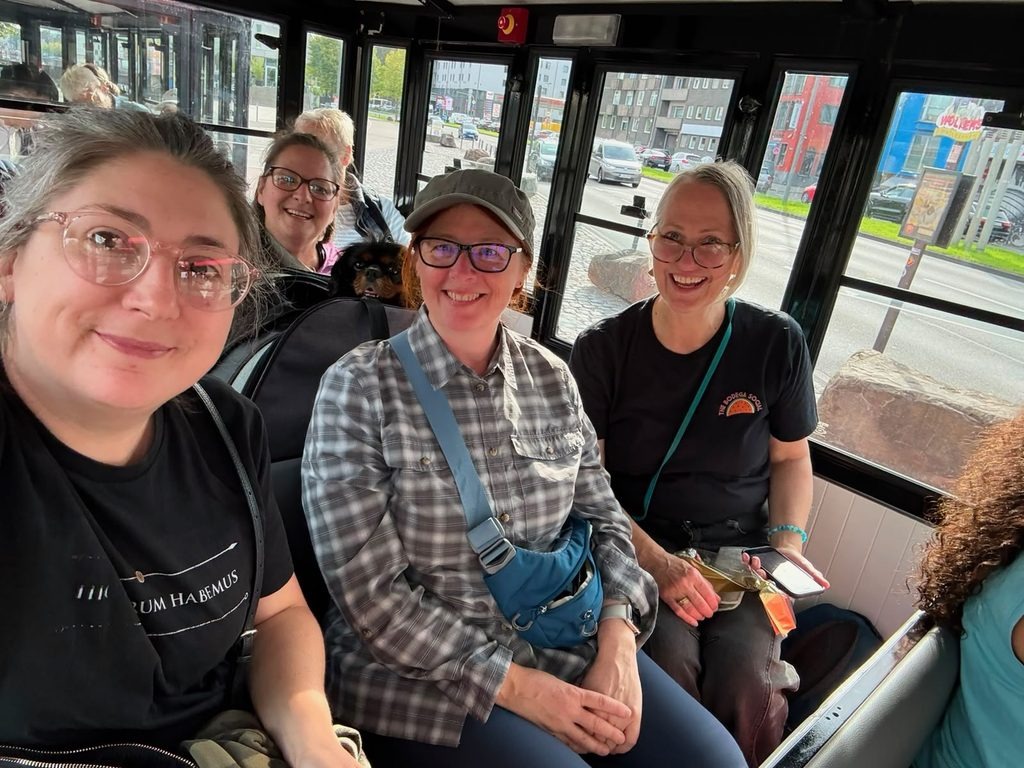
Thanks to Gabi’s efficient planning and organisation, we packed a huge amount into our short time in Cologne, meeting lots of volunteers and learning about lots of organisations, gaining a better understanding of the similarities and differences between our communities, and finding new sources of inspiration through our conversations. We’re really looking forward to continuing to work together and especially to hosting our German visitors in the Glenkens in early spring 2027!