The report to the COVID Inquiry has now been completed. It has been sent to the COVID Inquiry team and you can access the report here. Below you have a summary of some of the key points and links to the conversations that PVM had with people, to give you a preview of what the report includes.
Links to extracts from 6 of the 22 participants
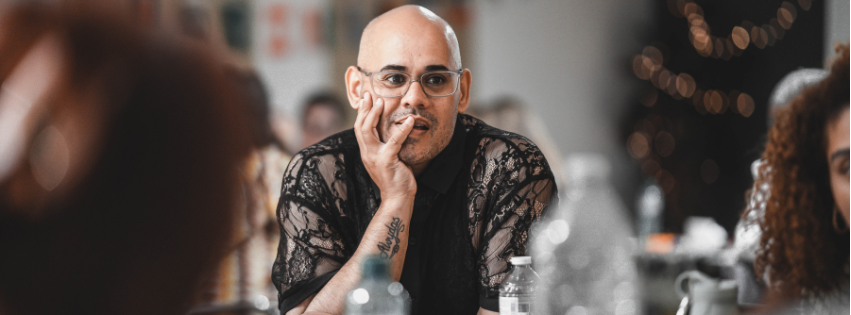
Keymn explains why having an understanding of the value of lived and living experience is training that healthcare professionals must have.
Miro explains why society has to re-think and understand disability differently.
Amanda tells us why COVID information was not fully accessible for Deaf people and what could have been done differently.
Andy explains to Isaac the reasons for involving people with lived and living experiences.
Hameed discusses both the positive and negative aspects of the pandemic.
Baroness Brinton talks about health and social care problems that were highlighted during the pandemic.
Links to full conversations with all participants
The PVM process starts with individuals narrating their experiences, facts and feelings. We did this by talking to 22 people as part of the joint work with DRUK, so that the lived experiences of Deaf and Disabled people could be input to the COVID Inquiry.
There was one point in the process, where the information given by individuals seemed overwhelming. This was partly because everything felt important and relevant, but also because the task of determining key themes seemed a difficult or limiting process. For example, when it felt as though every point people made was important, it then seemed like we might be trivialising the topic if we tried to distil it to a few main aspects.
However, the PVM process means that meaning emerges, although this doesn’t happen by magic. We listen and highlight what we think is important. We might colour code, group together or count how often topics are talked about. We also consider how frequently a contributor might return to talk about a lived experience, as an indication of how strongly they feel about the issue.
For the COVID Inquiry work, we began with some open questions to allow people to give their lived and living experiences in a broad way and in their own words. As the work progressed, and by the time we had recorded 10 narratives, we were able to include some more focussed questions, e.g. Other people have said _____, did you find this was the same for you or what was your experience of this? There was definitely the need to balance the open questions against more focussed ones, because we did not want to lead the participants down a specific route, but we were aware that being able to give the COVID Inquiry team specific details would be important.
In the report we’ve included direct quotations from many of the people who shared their lived experiences. Where necessary, we’ve also offered explanations, based on the conversations and online sense making workshops we held. This is because we wanted to clarify for the Inquiry why particular aspects were different or difficult for Deaf and Disabled people. The key points from the report are:
· There was confusing and frightening information from national government and local authorities to Deaf and Disabled people.
· COVID both highlighted and exacerbated existing systemic problems and Inequalities (including racism, ageism and ableism) within statutory services
· Even though there is legislation, little understanding exists about Deaf and Disabled people’s needs.The report is comprehensive and has had an emotional impact on some readers. We hope it will give people’s voices meaning so that the COVID Inquiry can make recommendations that will support Deaf and Disabled people, together with their carers. As Keymn Whervin stated in the foreword to the report: “The Inquiry must ensure that people affected by COVID have their voices heard, particularly in respect of how we co-produce health and social care”.
Isaac Samuels